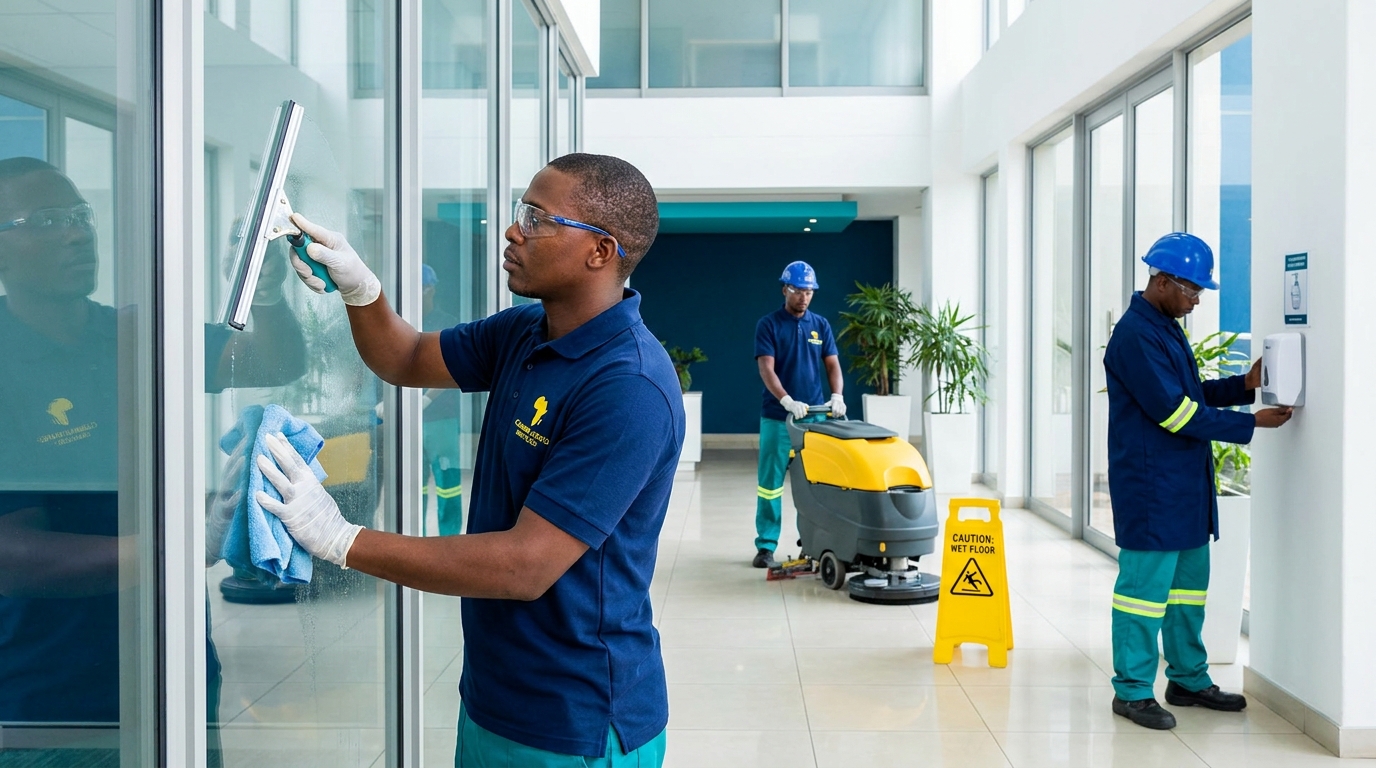
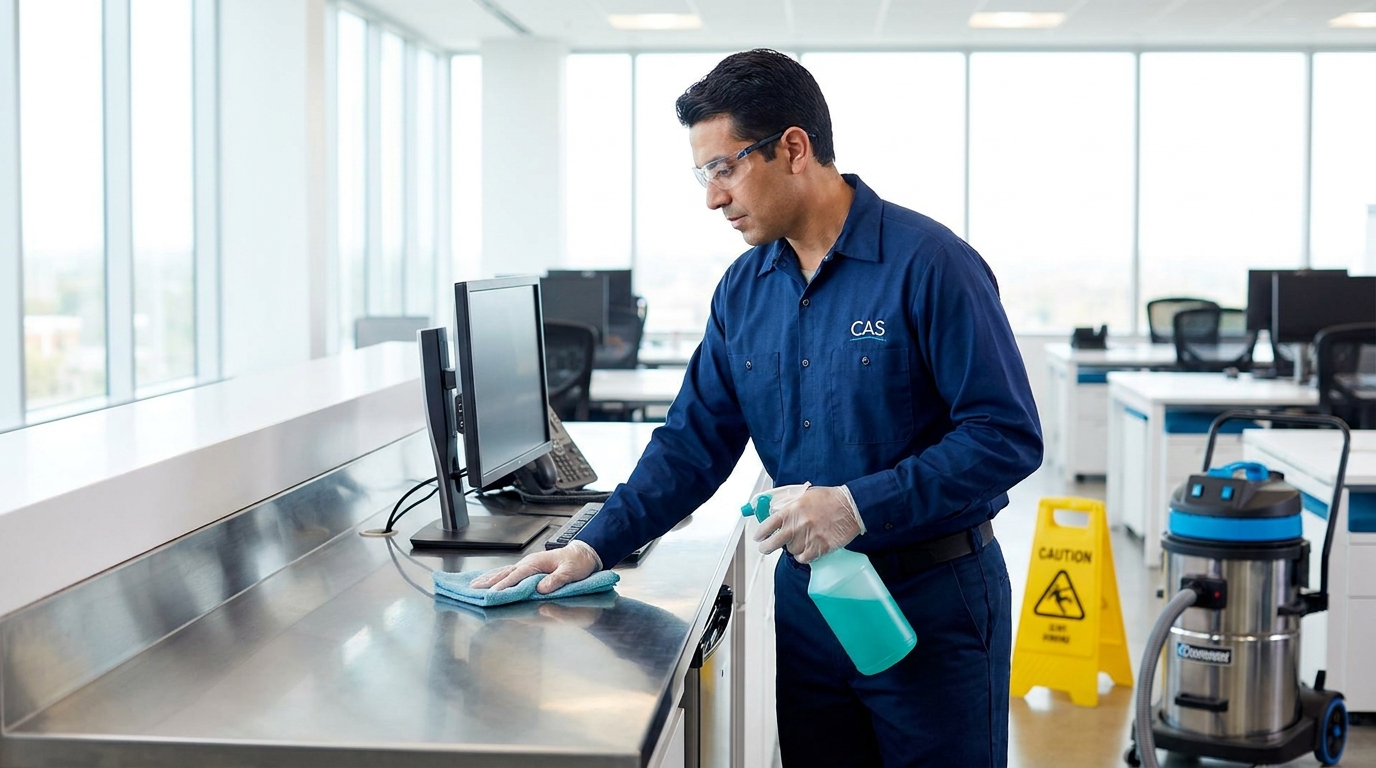
When business owners think about the cost of OHS non-compliance penalties in South Africa, they often focus only on the fine. But the financial exposure written into the Occupational Health and Safety Act 85 of 1993 is just the beginning.
For businesses in manufacturing, logistics, healthcare, and facilities-intensive environments, the full picture is far more serious. Criminal liability, insurance consequences, productivity losses, and long-term reputational damage all add up. Understanding what is really at stake is the first step toward protecting your people, your operations, and your business.
OHS Non-Compliance Penalties in South Africa: The Legal Exposure
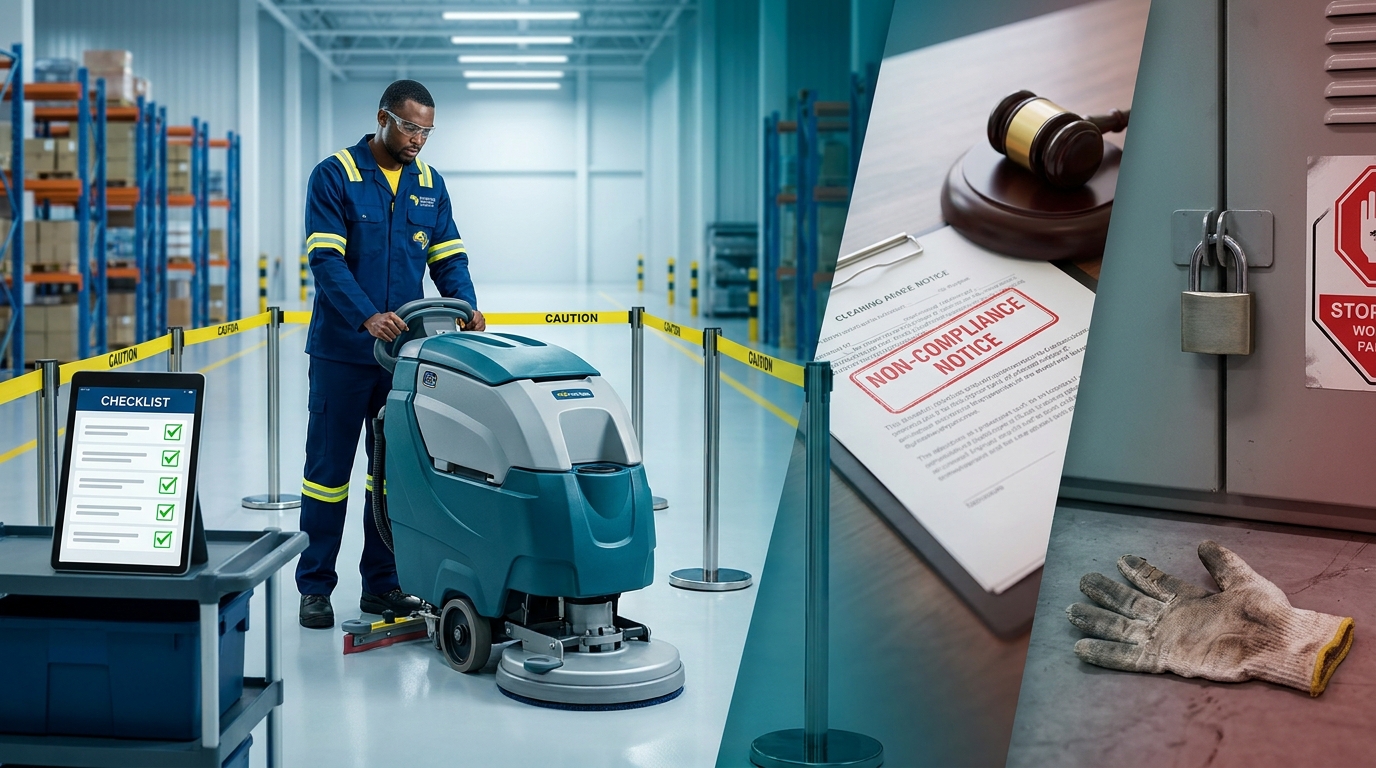
Illustration: OHS Non-Compliance Penalties in South Africa: The Legal Exposure
Non-compliance with the OHS Act in South Africa can trigger six different penalties and business disruptions, including:
-
Criminal fines: Employers who breach the OHS Act can face fines of up to R100,000 per offence, depending on the nature and severity of the non-compliance.
-
Imprisonment for individuals: Responsible individuals, including directors and managers, can face up to two years in prison if they knew about unsafe conditions and failed to act.
-
Personal liability for management: The Act assigns personal liability, so managers, supervisors, and directors can be held criminally responsible alongside the business.
-
Active inspections and enforcement: Inspectors from the Department of Employment and Labour conduct routine and surprise inspections, and enforcement has become stronger in recent years.
-
Prohibition notices: An OHS inspector can issue a prohibition notice that orders you to stop work in a specific area or across an entire facility until the hazard is fixed.
-
Operational shutdowns and downtime: Even a single day of forced shutdown for a production line, warehouse, or healthcare facility can cost far more than the fine itself and disrupt contracts and client service.
What Doesn’t Appear in the Fine Notice
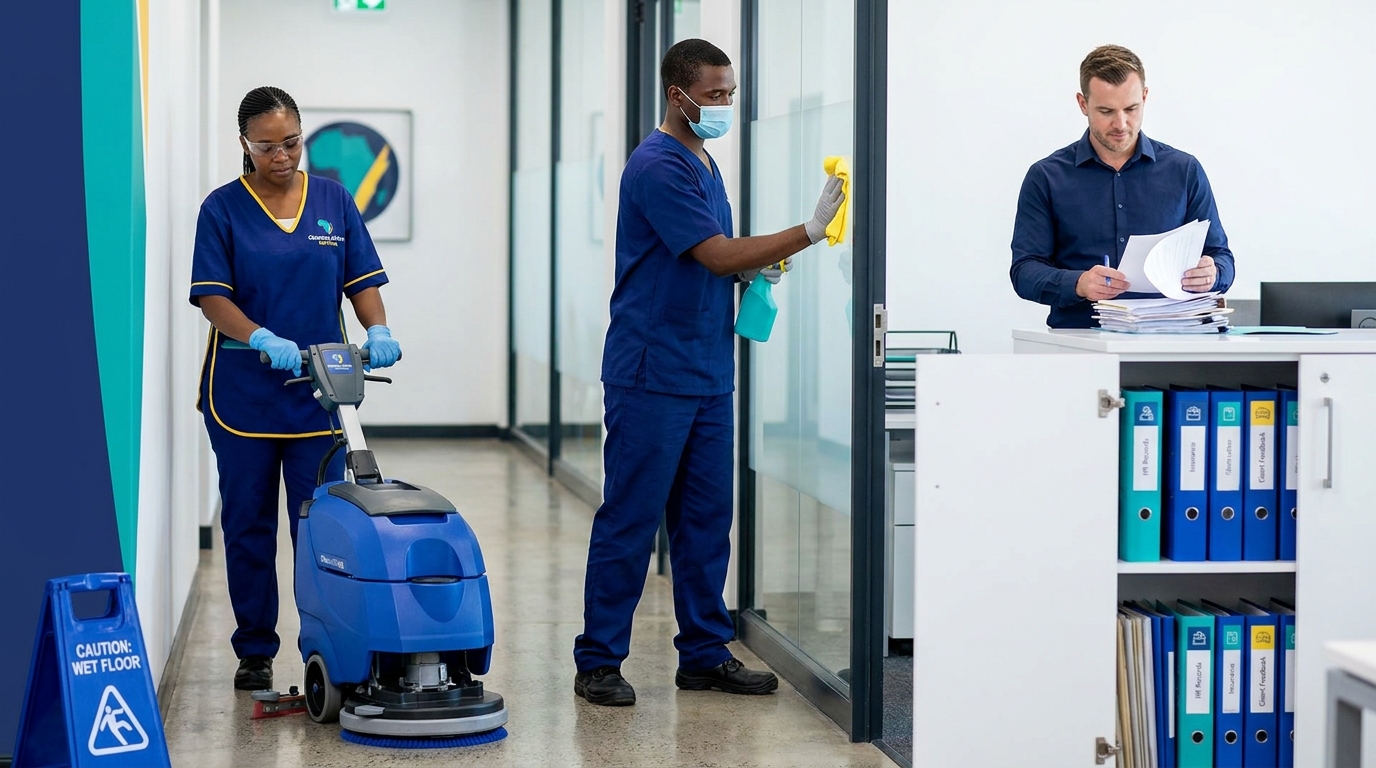
Illustration: What Doesn’t Appear in the Fine Notice
The most significant financial consequences of workplace non-compliance often do not appear on a fine notice. They build up quietly in HR records, insurance renewal documents, and client feedback, until they become impossible to ignore.
Rising Insurance Premiums and Claim Exposure
Insurance underwriters assess risk. When your claims history shows workplace injuries, illness-related absences, or incidents linked to poor hygiene and unsafe conditions, your premiums rise, sometimes by a large margin.
There is also a risk of reduced cover. If an injury or illness claim arises in a workplace where documented non-compliance exists, your insurer may have grounds to reduce or refuse cover. The cost of workplace non-compliance in this context is not a once-off fine. It is an ongoing financial burden that affects every renewal cycle.
Productivity Losses and Staff Absenteeism
Unhygienic workplaces make people sick. In shared facilities such as warehouses, production floors, healthcare wards, and office canteens, poor hygiene standards create conditions where illness spreads quickly. Absenteeism then becomes a persistent operational problem.
The effects show up in how the business runs each day. When key production staff are absent, output drops. When healthcare workers fall ill, patient care is affected. When logistics teams are short-staffed, deliveries are delayed, and clients notice the impact.
Cleanliness also affects morale. There is a strong link between the condition of a work environment and employee motivation. People perform better in spaces they are proud to work in. A neglected and poorly maintained facility sends a clear message about how much you value your workforce. That message has consequences for retention, engagement, and the extra effort that supports business performance.
Workplace Safety Liability in South Africa: Civil Claims
An employee who suffers a workplace injury or illness as a result of unsafe or unhygienic conditions has the right to pursue civil action against their employer. While the Compensation for Occupational Injuries and Diseases Act (COIDA) provides a framework for no-fault compensation, it does not protect employers from all civil liability. This is especially true in cases where negligence can be shown.
A single successful claim, combined with legal costs and reputational damage, can far exceed the cost of the maintenance and hygiene programme that would have prevented the incident. Workplace safety liability in South Africa is not only a legal problem. It is a direct financial and reputational risk.
Sector Realities: What Non-Compliance Looks Like in Practice
The risks are not abstract. OHS non-compliance looks different in each sector, but the consequences are just as serious.
Manufacturing
A manufacturing facility that allows chemical residue, industrial dust, or waste to build up on its floors and surfaces is not only creating a slip-and-fall risk. It may also be violating the Hazardous Chemical Substances Regulations and creating grounds for a prohibition notice.
During a routine audit, an inspector who finds weak or missing cleaning protocols can shut down a production line while the issues are fixed. The cost of this downtime, combined with potential fines and the reputational impact on supply chain partners, can be significant.
Logistics and Warehousing
In high-throughput logistics environments, cleanliness and order have a direct impact on safety. Spills on warehouse floors, poorly maintained loading bays, and inadequate ablution facilities for large workforces are common findings during inspections.
When a logistics business serves clients in food, pharmaceutical, or healthcare supply chains, the consequences of a failed audit go beyond internal penalties. They can trigger contract reviews and supplier audits that put long-term commercial relationships at risk.
Healthcare
In healthcare facilities, the consequences of hygiene non-compliance are often the most severe. Healthcare-associated infections remain a serious patient safety concern, and cleaning protocols are a key line of defence.
A healthcare facility that cannot show consistent, documented cleaning procedures that align with the Department of Health’s norms and standards faces several risks. These include patient harm, reputational damage, regulatory action, and even loss of operating accreditation. In this sector, the stakes are financial, clinical, and ethical.
How Professional Cleaning Creates a Defensible Compliance Record
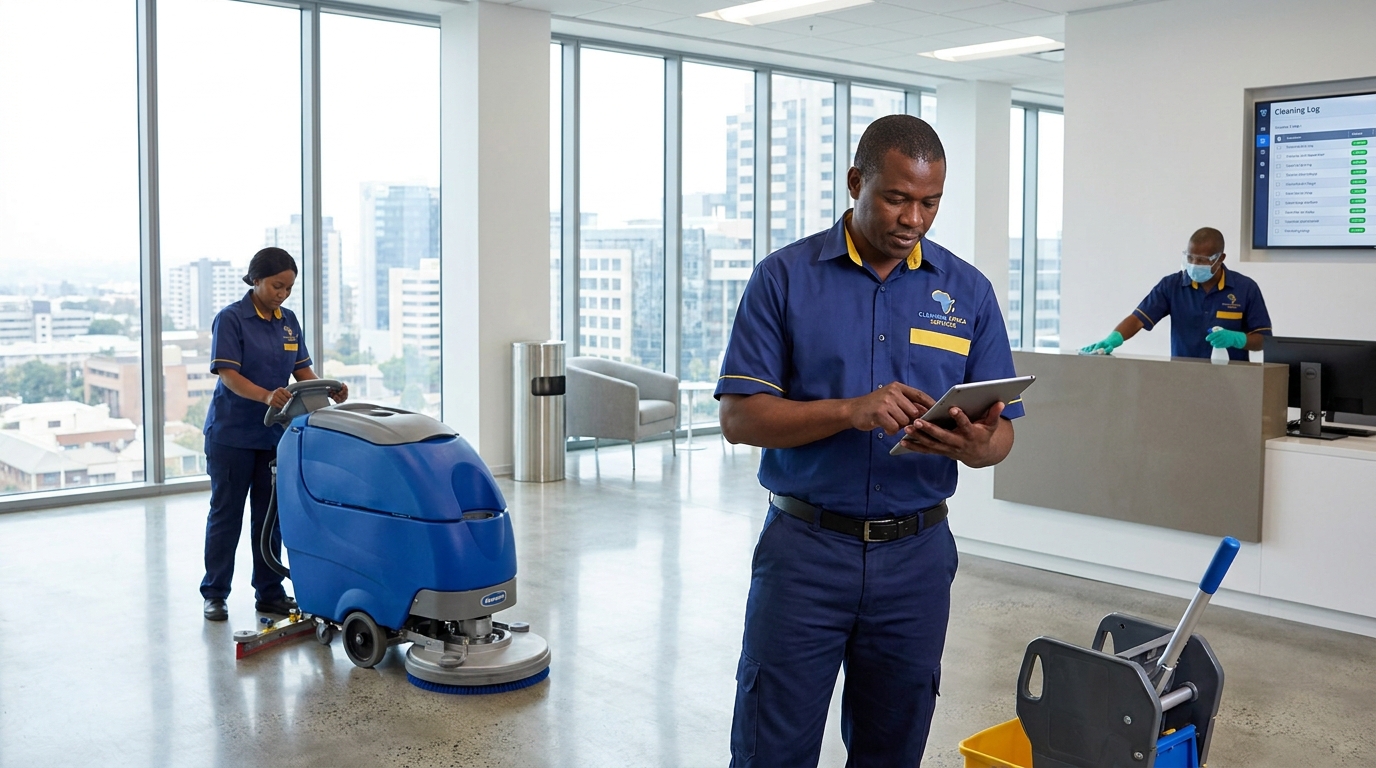
Illustration: How Professional Cleaning Creates a Defensible Compliance Record
One of the most practical and often overlooked aspects of OHS compliance is documentation. When an inspector arrives, whether scheduled or unannounced, your ability to show that you have an active, consistent, and professionally managed cleaning and hygiene programme becomes a powerful line of defence.
A professional cleaning partner provides five critical benefits:
-
Structured cleaning schedules aligned to the specific risk profile of your environment
-
Documented records of cleaning activities, products used, and frequencies, the kind of paper trail that satisfies an OHS inspector
-
Trained, accountable staff who understand the compliance requirements relevant to your sector
-
Hazardous waste management procedures that meet regulatory requirements
-
Proactive identification of hygiene risks before they become compliance failures
Actionable Steps to Reduce Your OHS Compliance Risk Today
-
Conduct an honest internal audit: Walk your facility as if you were an OHS inspector. What would you see? Where are the gaps in your cleaning, hygiene, and hazard management records?
-
Review your cleaning documentation: Check whether you can produce a cleaning schedule, a record of activities completed, and evidence of the products and procedures used. If not, your compliance record is exposed.
-
Assess your sector-specific obligations: The OHS Act is supported by sector-specific regulations. Make sure your cleaning and hygiene programme addresses the exact requirements for your industry.
-
Engage a professional cleaning partner: A reactive approach to cleaning, doing the minimum and hoping for the best, is no longer enough. A structured, professionally managed programme is a compliance asset and a business investment.
-
Train your internal team: Your own supervisors and facility managers should understand the basics of OHS hygiene requirements and how they link to OHS Act fines for employers. Work with your cleaning partner so that everyone is aligned.
The Bottom Line
The true cost of OHS non-compliance penalties in South Africa is never just the amount on a fine. It is the shutdown that costs you a week of production, the insurance claim that changes your renewal terms, the client who does not renew after a failed audit, and the skilled employee who leaves because the environment shows their wellbeing is not a priority.
Compliance is a standard that must be maintained every day by people who know what they are doing. If you are ready to build a cleaning and hygiene programme that protects your business and your people, contact Cleaning Africa Services today to request a free quote. A no-obligation facility assessment can show you where your risks lie and how a professional, structured cleaning programme can strengthen your workplace safety liability position in South Africa.