A commercial cleaning contract is far more than an administrative formality. It is the foundation of a clear, accountable working relationship. The contract defines what gets done, how well it must be done, who is responsible, and what happens when things do not go according to plan. Getting this document right from the start saves time, reduces disputes, and supports the hygiene and safety standards your business relies on every day.
Whether you are reviewing an existing cleaning service agreement or preparing to engage a new provider, this guide explains the key elements every commercial cleaning contract should include.
If you are a business owner reviewing a cleaning proposal, or a facilities manager preparing to put a cleaning service out to tender, this guide also covers what to look for in a provider’s contract before you sign, including South Africa-specific requirements around compliance and B-BBEE.

What Is a Commercial Cleaning Contract?
A commercial cleaning contract is a written legal agreement between a business (the client) and a professional cleaning company (the service provider). It sets out exactly what cleaning services will be delivered, at what standard, how often, and under what commercial and legal terms.
Unlike a verbal arrangement or a simple quote acceptance, a written commercial cleaning contract protects both parties. The client has a documented basis for holding the provider accountable. The provider has a clear, agreed scope that prevents scope creep and unpaid work.
In South Africa, a written contract is especially important because it must account for sector-specific requirements: OHS Act compliance, B-BBEE procurement obligations, and the Labour Relations Act implications for on-site cleaning staff. A verbal agreement cannot carry that weight.
The Essential Elements of a Commercial Cleaning Contract
A well structured commercial cleaning contract gives both the client and the provider a clear, shared framework that reduces confusion and disputes. The sections below outline the nine key areas to include so your commercial cleaning contract and cleaning SLA requirements are complete and practical.
1. Scope of Work Definition
The scope of work is the cornerstone of any commercial cleaning contract. It should leave absolutely no room for uncertainty. A vague scope is one of the most common sources of service disputes, and does not help either party.
What to specify in your scope of work:
- Areas to be cleaned: List every zone by name and function. For example, offices, boardrooms, reception areas, ablution facilities, kitchens, server rooms, warehouses, loading bays, and external areas where this applies.
- Tasks per area: Define the cleaning activities for each space. For example, “vacuum and mop all hard floor surfaces in open plan office areas” is more useful than “general cleaning”.
- Exclusions: Be just as clear about what is not included. Specialist services like deep carpet extraction, high level window cleaning, or post construction cleaning should appear separately if they are not part of the standard cleaning SLA requirements.
- Special requirements: Note any site specific needs. These may include sensitive equipment, access controlled areas, food safe cleaning protocols, or high traffic zones that need extra attention.
A thorough scope of work protects the client from receiving less than expected. It also gives the cleaning company a clear mandate to plan staffing, equipment, and time.
2. Service Frequency and Scheduling
Your commercial cleaning contract should state exactly how often each task or area is serviced. This may be daily, weekly, monthly, or on another agreed cycle. Frequency often changes by area. Ablution facilities may need multiple cleans per day, while deep scrubbing of hard floors may only be done once a month.
Key scheduling details to include:
- Days and times of service, including whether cleaning occurs during or after business hours
- Public holiday provisions, such as whether service continues, is rescheduled, or is excluded
- Arrangements for special events, seasonal deep cleans, or ad hoc service requests
- Notice periods required for schedule changes from either party
Clear scheduling terms prevent misaligned expectations and help keep your facility ready for business.
Cleaning Frequency Reference Guide
The right service frequency depends on your facility type, foot traffic, and hygiene requirements. The table below provides a practical starting point. Your contract should reflect your specific needs, not a generic default.
| Area or Task | Typical Frequency | Notes |
|---|---|---|
| Ablution facilities | 2 to 4 times daily | Higher traffic facilities may need more frequent checks |
| Reception and common areas | Daily | Including bins, hard floors, and surface wiping |
| Open plan offices | Daily or 3 times per week | Depends on occupancy and desk policy |
| Boardrooms and meeting rooms | After each use or daily | Specify whether this is reactive or scheduled |
| Kitchen and canteen | Daily, with deep clean weekly | Food safe chemicals must be specified in the contract |
| Hard floor scrubbing (full) | Monthly | Interim spray buffing may be weekly |
| Carpet extraction | Quarterly to bi-annually | Usually a separate line item outside standard SLA |
| High-level dusting and vents | Quarterly | Often excluded from daily scope, confirm in writing |
| External areas and entrances | Daily or as needed | Weather and foot traffic will influence frequency |
3. Service Level Agreement (SLA) Requirements
A strong set of cleaning SLA requirements in your contract defines the measurable standards your service provider must meet. This shifts the agreement away from simple task lists and towards clear, outcome based accountability.
What your SLA should address:
- Quality benchmarks: Describe what “clean” means for each area. You can use a grading scale, such as pass or fail inspection criteria or a percentage based score, so that assessments stay objective.
- Response times: State how quickly the provider must respond to a reported issue. For example, spill response within 30 minutes, or rectifying a failed inspection within four business hours.
- Staffing commitments: Indicate the minimum number of trained cleaning staff required on site per shift. Include provisions for cover when staff are absent.
- Escalation timeframes: Define how long an unresolved service issue may stay open before it is escalated to a more senior level.
- Consequence clauses: Explain what remedies apply if contract cleaning terms and conditions are not met on a regular basis. This could include a service credit, a specific remediation plan, or a contract review.
SLA terms give both parties a shared language for measuring performance and handling shortfalls constructively, instead of reacting in the moment.
4. Quality Control and Reporting Mechanisms
A commercial cleaning contract is only as strong as the oversight processes built into it. Quality control clauses ensure that standards are not only promised on paper but checked in practice.
Include provisions for:
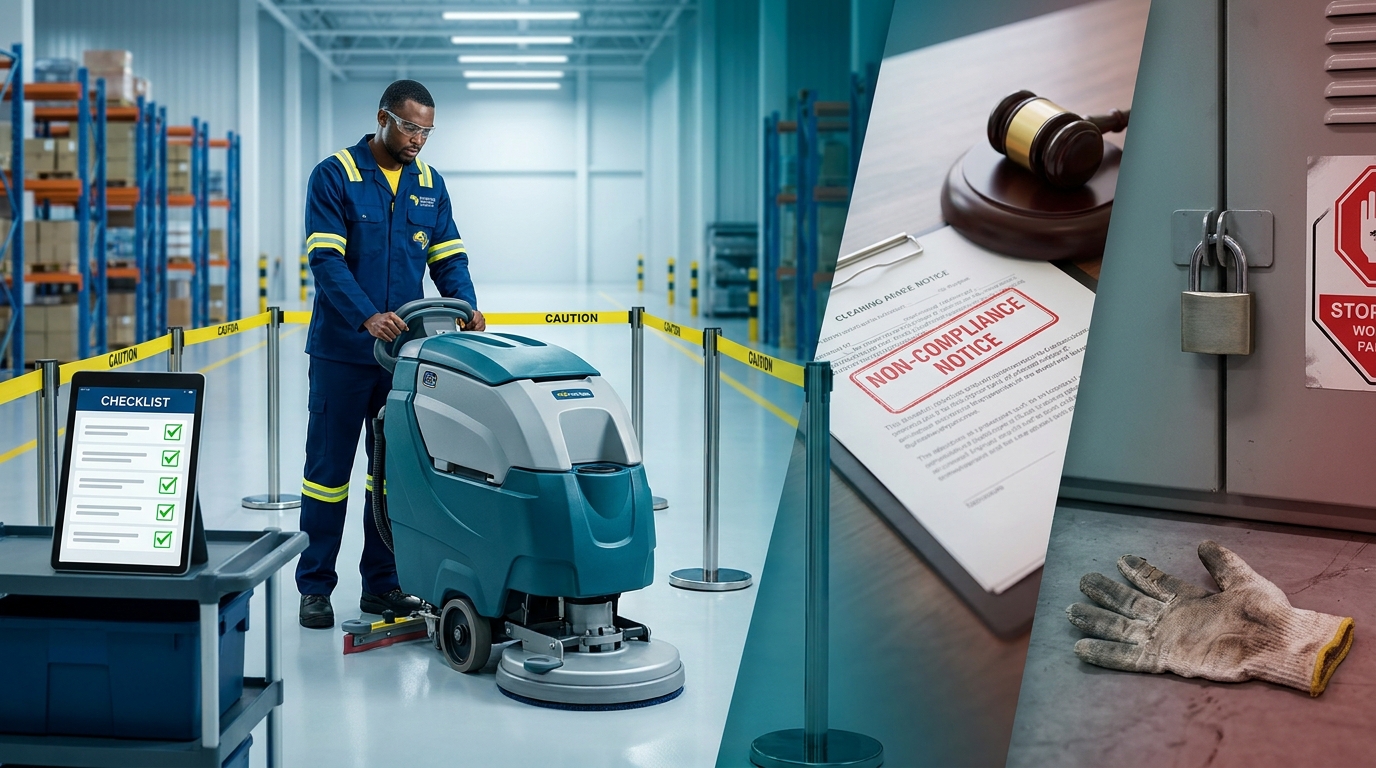
- Regular site inspections: State how often formal inspections take place, who conducts them, and how results are recorded and shared.
- Inspection reports: Agree on a standard reporting format. This can include area by area scores, photos where useful, and notes on corrective actions.
- Client feedback channels: Define how clients log complaints or compliments, and what the expected response time is.
- Review meetings: Schedule monthly or quarterly performance review meetings between nominated client and service provider representatives. Use these sessions to discuss trends, recurring issues, and future needs.
5. Health and Safety Compliance Clauses
South African workplaces fall under the Occupational Health and Safety (OHS) Act. Your cleaning service agreement must reflect this. Health and safety is a shared responsibility, and the contract should be clear about each party’s duties.
Essential health and safety provisions:
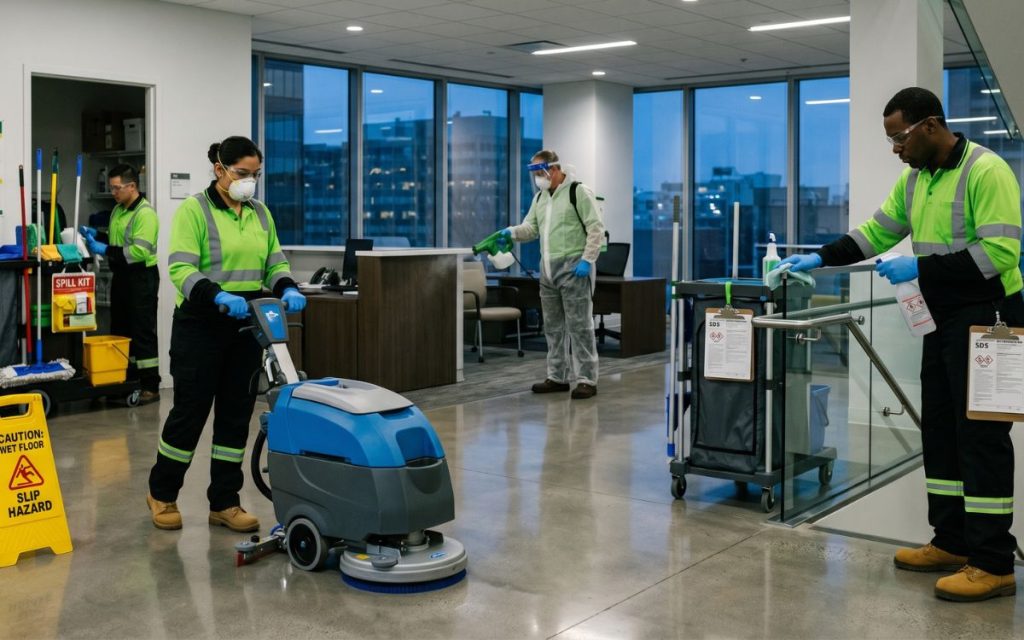
- OHS Act compliance: Confirm that the service provider operates in full compliance with the Occupational Health and Safety Act 85 of 1993 and all relevant regulations. This includes rules on hazardous chemical substances and personal protective equipment, or PPE.
- Safety data sheets (SDS): Require the provider to keep and share SDS documents for all cleaning chemicals used on site.
- PPE provision: Confirm that the provider supplies and enforces proper PPE for all cleaning staff. This may include gloves, safety footwear, and respiratory protection where needed.
- Incident reporting: Define the process for reporting workplace incidents, near misses, or chemical exposures. Align this with the client’s own reporting procedures.
- Training requirements: State that all cleaning staff must receive health and safety induction training, including site specific hazard awareness.
6. B-BBEE Verification and Procurement Compliance
For many South African businesses, procurement decisions are guided by Broad Based Black Economic Empowerment, or B-BBEE, requirements. Your cleaning service agreement South Africa should address this clearly.
What to include:
- Confirmation of the provider’s current B-BBEE status level and the name of the verification agency
- A requirement for a valid B-BBEE certificate annually or upon renewal
- A clause that obliges the provider to inform the client of any material change in its B-BBEE rating during the contract period.
7. Equipment and Consumable Responsibilities
Unclear roles around who supplies what can lead to tension. Your commercial cleaning contract should clearly assign responsibility for equipment and consumables.
Specify the following:
- Cleaning equipment: Decide who supplies and maintains vacuums, scrubber dryers, pressure washers, and other machines. Set out the process if equipment fails.
- Cleaning chemicals: List which products are approved for use on site and who must supply and restock them.
- Consumables: Confirm if hand soap, paper towels, toilet paper, and bin liners form part of the contract. If they do, define who orders them and how often they are restocked.
- Storage: Confirm that the client will provide a secure, suitable storage area for equipment and materials.
- Damage liability: Clarify who is liable for damage caused by equipment failure or incorrect use, and what the claims process looks like.
8. Escalation Procedures
Even in strong service relationships, issues will arise. A well written commercial cleaning contract should include a clear escalation path. This helps resolve problems quickly and professionally, with no doubt about who to contact or what happens next.
A practical escalation structure includes:
- First level: Site supervisor or cleaning team leader, for immediate, day to day issues
- Second level: Operations manager or account manager, for unresolved problems or recurring service failures
- Third level: Senior management, for serious disputes or major service breakdowns
Each level should have a clear response window. The contract must also state what happens if an issue is still unresolved after escalation. This can include formal dispute resolution, such as mediation or arbitration, if both parties agree.
9. Contract Duration and Termination Terms
No commercial cleaning contract is complete without clear terms around its duration and how either party can end it.
Include the following:
- Contract term: State the start date, end date, and whether the agreement renews automatically or needs a formal renewal.
- Notice period: Define the notice needed for termination without cause. This is often 30, 60, or 90 days, depending on the size of the agreement.
- Termination for cause: Describe what counts as a material breach, what cure period applies, and when immediate termination is allowed.
- Exit provisions: Set out handover duties, including the return of access cards, keys, equipment, and any client owned materials.
- Price escalation: Include a clause that explains how prices may increase each year. Many contracts refer to a known index, such as CPI, so that increases are clear and predictable.
How Much Does a Commercial Cleaning Contract Cost in South Africa?
Pricing for commercial cleaning contracts in South Africa varies considerably based on facility size, cleaning frequency, staff requirements, and the scope of services. There is no single standard rate, and any provider quoting a price without understanding your site in detail should be approached with caution.
The main factors that influence contract pricing:
- Floor area and layout: Larger or more complex facilities require more staff time and equipment. Price is typically calculated per square metre or per man-hour, depending on the service model.
- Frequency of service: Daily cleaning costs more than three-times-per-week service. Deep cleans, window cleaning, and carpet extraction are usually priced separately.
- Staffing model: Whether staff are dedicated to your site full time or shared across multiple clients affects both cost and consistency.
- Consumables: If hand soap, paper products, and bin liners are included in the contract, this adds to the monthly fee. Confirm what is and is not included before comparing quotes.
- Compliance costs: Reputable providers price in training, PPE, SDS management, and OHS compliance. A quote that looks low may be excluding these.
- Annual escalation: Most contracts include a CPI-linked price escalation clause. Confirm the escalation mechanism and the review date so increases do not come as a surprise.
When comparing proposals, do not evaluate on monthly cost alone. Compare scope, staffing levels, quality control commitments, and what each provider includes in their cleaning SLA requirements. A lower quote that delivers less coverage, less oversight, and no accountability structure will cost more in the long run.
How to Choose the Right Commercial Cleaning Provider
A strong commercial cleaning contract starts with choosing a provider worth contracting with. The document protects you, but only if the company behind it has the systems, the people, and the commitment to deliver on it.
Here is what to look for before you sign:
- Proven track record in your sector: A provider experienced in office cleaning may not be the right fit for a food production facility or a healthcare environment. Ask for references from clients with similar facilities.
- Compliance documentation: Request their OHS file, B-BBEE certificate, public liability insurance certificate, and COIDA registration before engaging. A reputable provider will have these ready without hesitation.
- Transparent SLA structure: If a provider cannot explain how they measure and report on service quality, that is a warning sign. Look for structured inspection processes, not just assurances.
- Account management: Find out who your day-to-day contact will be and how quickly issues are escalated. A dedicated account manager is a sign the provider takes long-term relationships seriously.
- Staff training and retention: Ask about induction programmes, ongoing training, and staff turnover rates. High turnover on your site is disruptive and affects quality.
- Willingness to negotiate the contract: A provider who is unwilling to discuss contract terms or dismisses your SLA requirements is not a long-term partner. You want a company that welcomes the detail.
Partner With a Provider Who Welcomes the Detail
A comprehensive commercial cleaning contract is not a sign of distrust. It is a sign of professionalism. It shows a shared commitment to clear expectations, consistent delivery, and a stable, long term service relationship.
Ready to put the right framework in place? Contact Cleaning Africa Services to discuss your requirements and receive a fully transparent service proposal built around your needs, your standards, and your commercial cleaning contract terms.