When businesses think about workplace bathroom hygiene and OHS Act compliance, the focus often falls on the basics: keeping toilets clean and stocked with soap. But the Occupational Health and Safety Act (Act 85 of 1993) and its regulations go much further than that, and set specific legal duties for every employer in South Africa.
These rules cover the minimum number of toilet facilities you must provide, the standard of cleanliness you must maintain, and the hygiene consumables you must supply. Falling short can lead to OHS inspections, compliance notices, and serious reputational risks. This article explains what the law requires, where businesses commonly fall short, and how a structured professional cleaning programme helps you meet workplace bathroom hygiene OHS Act obligations.
What the OHS Act and Facilities Regulations Actually Require
The OHS Act and its Regulations set clear rules for workplace bathroom hygiene OHS Act compliance, which inspectors use to check if your facilities are safe and hygienic. These include:
- Safe working environment: Employers must provide and maintain a working environment that is safe and without risk to employee health.
- Minimum toilets and basins: Regulations set ratios for how many toilets and washbasins you must have based on staff numbers and shifts, with separate facilities for men and women where needed. Providing fewer than required is a direct compliance failure.
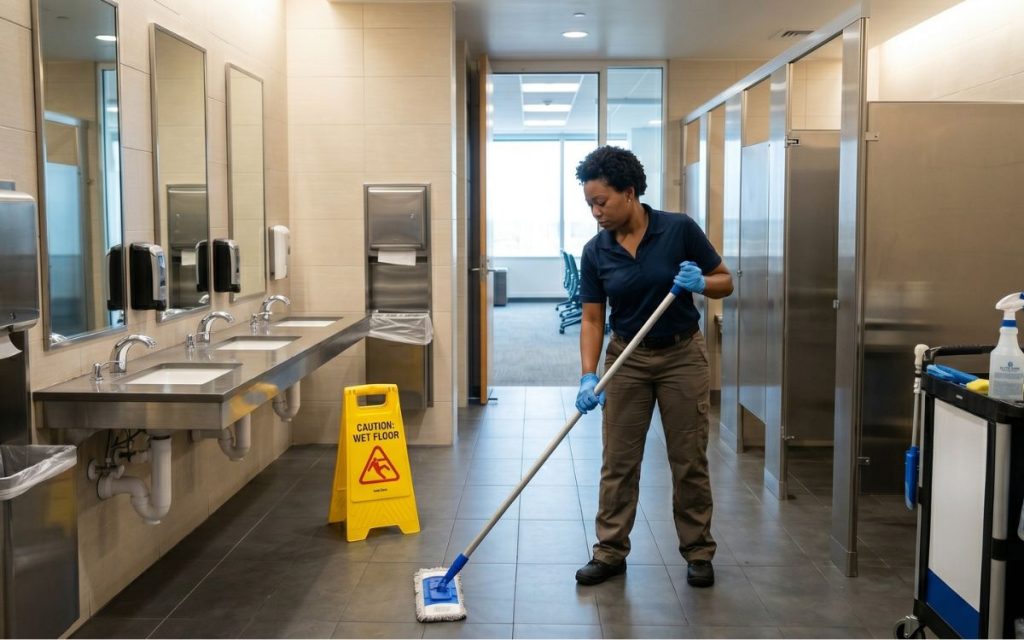
- Clean, well-maintained facilities: Toilets must be kept clean throughout the day, in good repair, and properly lit and ventilated. Floors, walls, and surfaces must be easy to clean and free from built-up dirt, bacteria, and odour.
- Hygiene consumables: You must supply soap or another hand cleanser at all basins, hand-drying options such as paper towels or hand dryers, and sanitary disposal units in female toilets where required.
- Records and proof of standards: Inspectors expect cleaning schedules, signed logs, and maintenance records that show your workplace restroom hygiene standards are managed consistently, not just on the day of inspection.
How Inadequate Bathroom Hygiene Triggers OHS Inspection Failures
OHS inspections in South Africa can be triggered by routine audits, employee complaints, or incident reports. When an inspector visits your site, workplace bathrooms and restroom facilities are always part of the assessment. Five common findings that lead to compliance notices include:
- An insufficient number of facilities for the number of employees on site.
- Unclean or poorly maintained facilities, including dirty floors, stained sanitary ware, blocked drains, or strong odours.
- No soap or hand-drying options at washing facilities.
- Broken fixtures or poor ventilation that have not been reported or fixed.
- No evidence of a cleaning schedule or maintenance record, which shows that hygiene management is not systematic or documented.
The last point is especially important. An inspector who finds clean facilities but no record of how that standard is maintained cannot confirm that the standard is consistent. A documented cleaning programme with signed service records, consumable replenishment logs, and a structured maintenance schedule is not only good practice. It is also the proof that your commercial bathroom cleaning compliance is managed over time, not only on the day of the inspection.
How Your Bathroom Cleaning Products and Methods Impact OHS Compliance
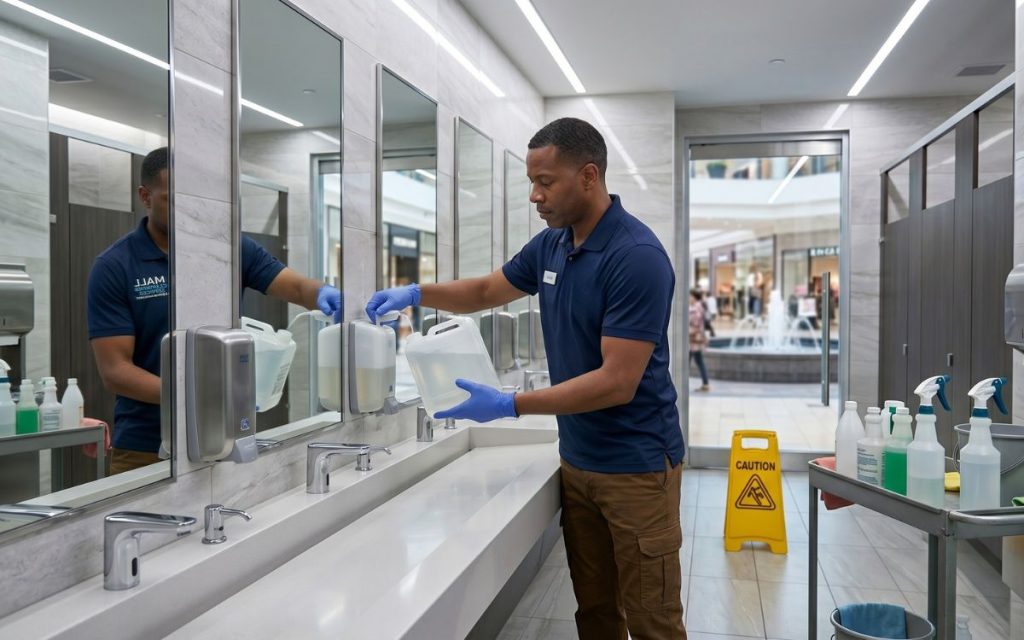
Not all cleaning achieves the same result, and for compliance, that difference matters. Effective workplace restroom hygiene standards depend on the use of suitable cleaning agents, correct dilution ratios, proper contact time for disinfectants, and trained staff who understand cross-contamination risks and the correct order of cleaning tasks.
Many businesses underestimate how much depends on the quality of products and methods used in their washroom cleaning routines. The right bathroom cleaner for your business does more than remove visible dirt. It reduces pathogens on surfaces, controls odours at their source, and extends the life of your sanitary fixtures. Using weak products or applying them incorrectly can leave surfaces looking clean but still below the hygiene level required for workplace bathroom hygiene and OHS Act compliance.
Building a Defensible Compliance Record with a Professional Cleaning Programme
A professional bathroom cleaning programme does three things at the same time. It keeps your facilities hygienic, it ensures your consumable obligations are met, and it generates the documentation that shows your compliance position to any inspector or auditor.
This is how you move from reacting to bathroom issues to managing your workplace restroom hygiene standards with a clear plan.
What a Structured Programme Looks Like in Practice
A cleaning programme must be built around the specific OHS obligations of each workplace. A structured programme typically includes five core elements:
- Scheduled daily cleans aligned with your operating hours and employee volumes. This helps ensure facilities meet the required standard throughout the working day, not only at opening time.
- Planned deep cleaning cycles that cover grout lines, drainage systems, extractor fans, and high-touch surfaces that daily cleaning cannot reach in the same depth.
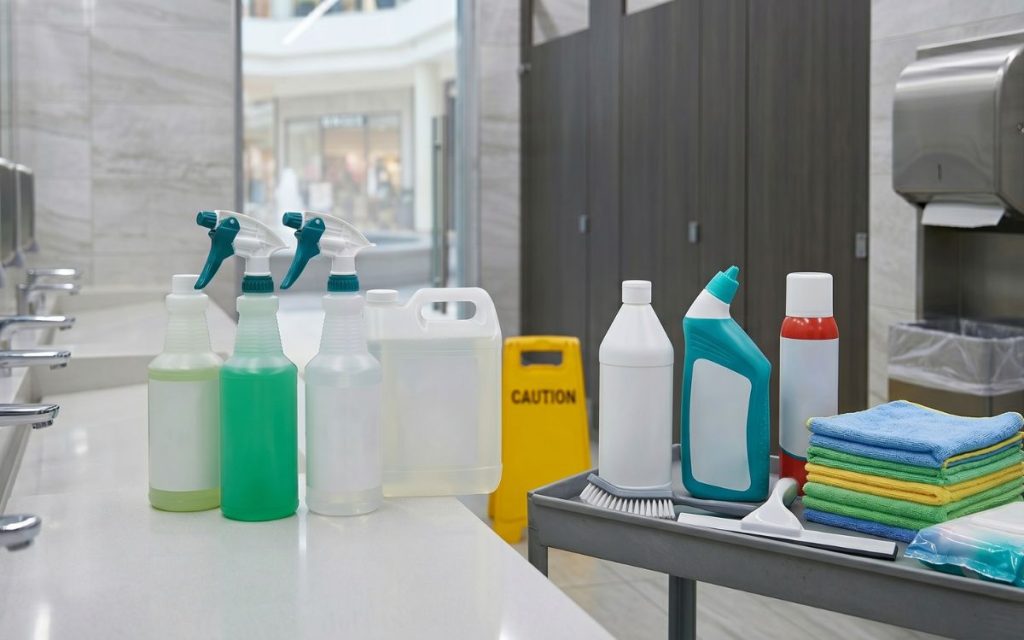
- Consumable management, including soap, paper towels or hand dryers, toilet paper, and sanitary disposal, managed as part of the service so that shortfalls are picked up before they become compliance gaps.
- Signed service records and cleaning logs kept on site and available for inspection at any time.
- Responsive maintenance reporting, where teams are trained to report fixture damage, plumbing issues, and ventilation concerns so maintenance can act before a small issue becomes a compliance finding.
Practical Steps You Can Take Today
If you are unsure about your current compliance position, here are five immediate steps to take:
- Count your facilities and compare them with the ratios in the Environmental Regulations for Workplaces for your current headcount.
- Walk through your bathrooms with a critical eye. If you would not be comfortable with an inspector seeing them right now, you have your answer.
- Check your consumables. Are soap dispensers full? Is hand-drying in place? Are sanitary disposal units in female bathrooms emptied regularly?
- Review your cleaning records. If you cannot produce a signed cleaning log for the past month, you have a documentation gap that needs attention.
- Engage a professional cleaning partner if your current arrangements do not deliver consistent, documented results.
These steps will help you understand where you stand against workplace restroom hygiene standards and where a professional service can close the gaps.
Let Professional Services Protect Your Compliance
Meeting your workplace bathroom hygiene OHS Act obligations is a legal duty from the moment you employ your first staff member. With the right cleaning partner in place, compliance becomes a managed, repeatable process instead of a source of stress.
Request a free quote from Cleaning Africa Services today to discuss a tailored bathroom cleaning and hygiene programme for your workplace. Let us help you build a compliance record you can stand behind, and a restroom standard your employees and visitors will notice.