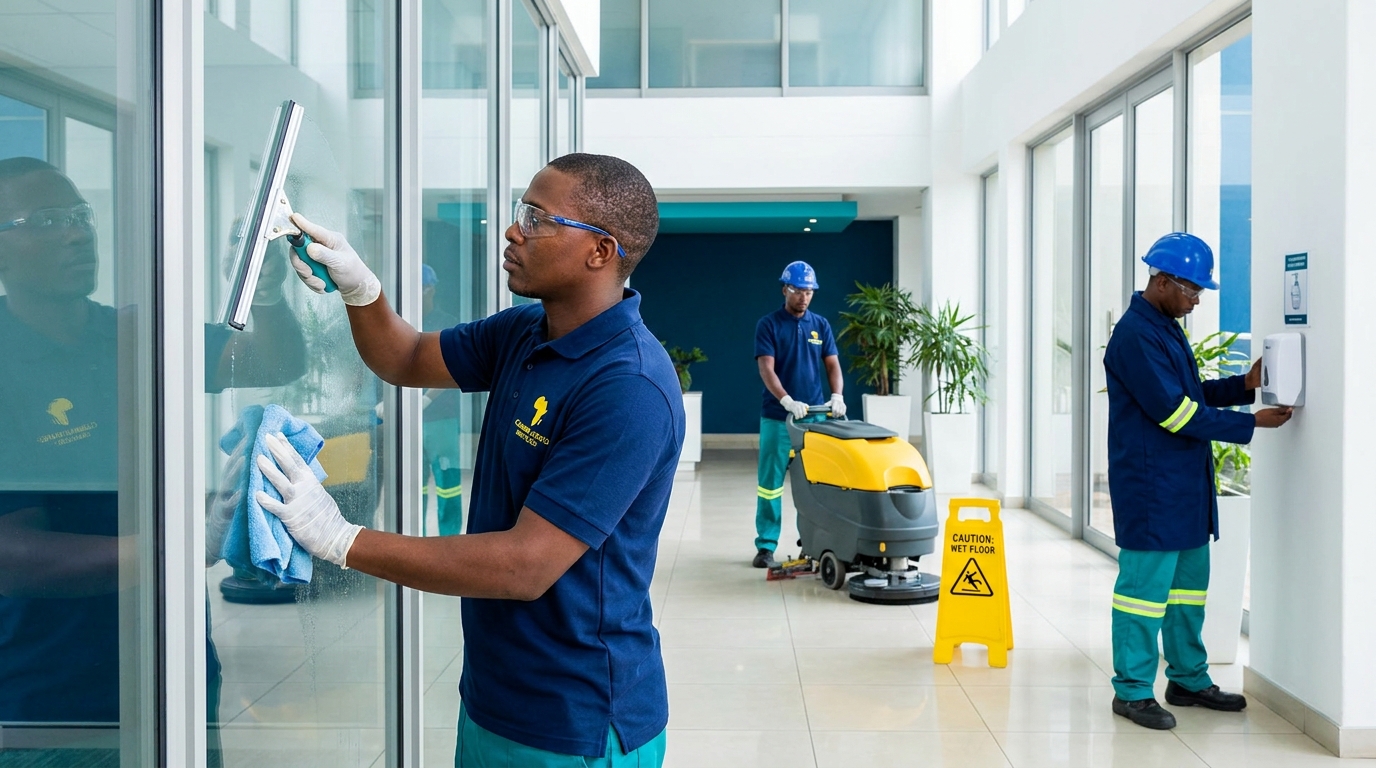
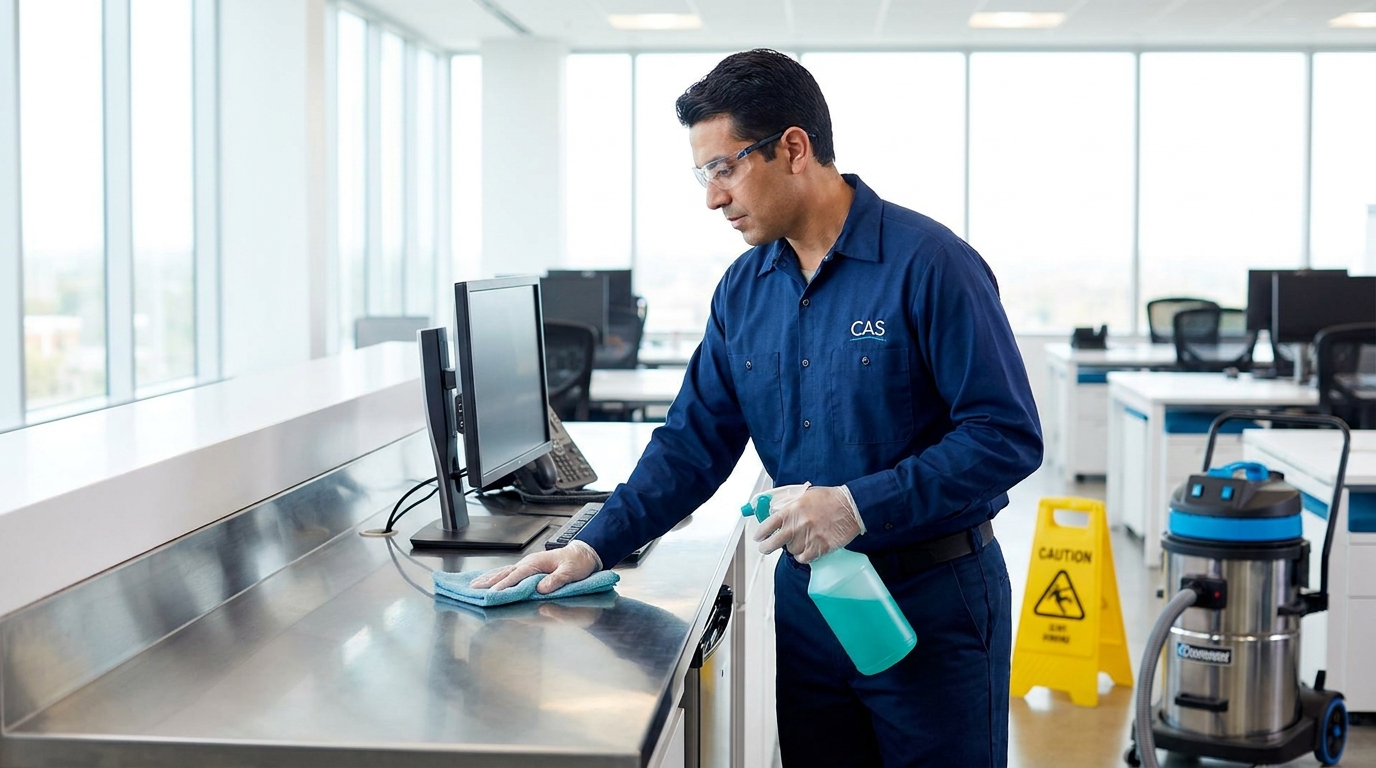
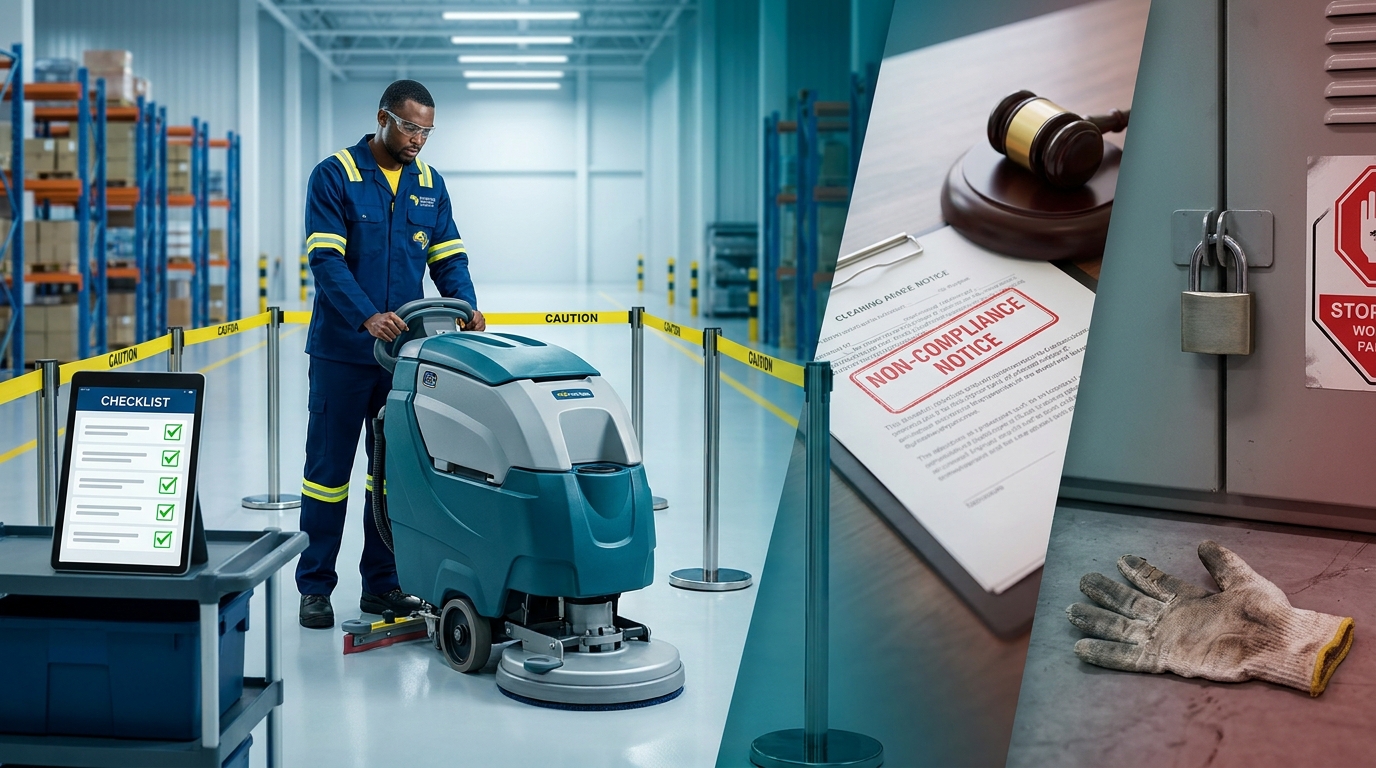
When businesses evaluate cleaning services, the conversation often starts with cost. Increasingly, the more pressing question is risk. Under South Africa’s Occupational Health and Safety Act 85 of 1993, every employer has a legal duty to provide and maintain a safe, healthy working environment. Professional cleaning for OHS compliance sits at the centre of meeting that responsibility. This article explains what that duty looks like in practice, where informal cleaning arrangements fall short, and what to look for in a cleaning partner that can actually support your compliance obligations.
A poorly cleaned workplace is not only unpleasant, but it is also a liability. When an inspector arrives, the difference between a documented, professionally managed cleaning programme and an informal in-house arrangement becomes visible very quickly.
What the OHS Act Requires from Employers on Workplace Cleanliness
Section 8 of the Occupational Health and Safety Act places a general duty on employers to provide a safe working environment. Supporting legislation, specifically the Facilities Regulations published under the OHS Act, sets out more specific requirements for the cleanliness of workplaces. These include the maintenance of sanitary facilities, the safe disposal of waste, and the management of hazardous substances used in cleaning and maintenance.
In practical terms, this means an employer cannot simply assume a workplace is hygienic. The duty is active, not passive. You are required to put systems in place, monitor those systems, and be able to demonstrate compliance when asked. A professional cleaning programme is one of the most direct ways to satisfy that obligation.
Our related article on how the OHS Act regulations shape cleaning standards covers the specific legislative detail behind these requirements. The sections below focus on what compliance looks like on the ground.
What Inspectors Look For
Inspectors focus on five core areas of workplace hygiene compliance:
- Documented cleaning schedules: Is there a written record of what was cleaned, when, and by whom?
- Chemical handling compliance: Are cleaning products correctly labelled, stored, and handled according to safety data sheets?
- Staff training records: Have the people responsible for cleaning received appropriate hygiene and safety training?
- Sanitation facility standards: Are bathrooms, kitchens, and communal areas being cleaned at an appropriate frequency?
- Incident and hazard reporting: Is there a process for identifying and reporting hygiene-related risks?
These expectations are not unreasonable. Meeting them consistently, and being able to prove that you have, requires more than goodwill and a part-time cleaner.
What Are the Basic Cleaning Standards That Apply to South African Workplaces?
Cleaning standards in a workplace context refer to defined benchmarks for hygiene outcomes, frequency, and method. While South Africa does not publish a single consolidated national cleaning standard equivalent to, for example, the Australian AS/NZS 3733, the Facilities Regulations under the OHS Act set enforceable baseline requirements. Industry bodies such as the National Contract Cleaners Association (NCCA) provide additional guidance that shapes professional practice.
In practical terms, the five core principles that underpin compliant workplace cleaning are:
- Frequency: Cleaning must happen at intervals appropriate to the level of use and risk in each area.
- Method: Tasks must be carried out using correct techniques and appropriately selected products to achieve effective hygiene outcomes, not just surface appearance.
- Chemical safety: Products used must be suitable for the surface and environment, correctly diluted, and handled in line with their safety data sheets.
- Coverage: All areas of the facility must be included in a defined scope, with no high-risk zones overlooked.
- Verification: Cleaning must be recorded and signed off so that the outcome can be confirmed and audited.
These are the principles a professional cleaning company applies systematically. They are also the principles an OHS inspector will use when assessing whether your workplace hygiene management is adequate.
The Risks of Ad Hoc and In-House Cleaning
Many businesses rely on in-house cleaning arrangements. A receptionist wipes down surfaces. A maintenance worker mops the bathroom. A rotating roster of employees is given cleaning duties on top of their main roles.
These arrangements can feel cost-effective in the short term, but they carry three significant compliance risks that are easy to overlook until something goes wrong.
Inconsistency and Gaps in Coverage
Without standardised cleaning protocols, hygiene levels vary depending on who is working, how much time they have, and how clearly their responsibilities are defined. A common problem is that high-touch areas such as door handles, elevator buttons, and shared equipment are either cleaned irregularly or missed entirely.
In a workplace context, this is more than a simple cleanliness issue. It is a health risk that can result in employee illness, absenteeism, and, ultimately, an OHS violation.
Lack of Documentation
If your cleaning is done informally, there is usually no paper trail in the form of signed-off cleaning logs, no records of which areas were serviced and when, and no evidence that sanitation protocols are being followed.
When a Labour Department inspector arrives and asks for documentation, the inability to produce it is not viewed favourably, even if the workplace looks clean on the day.
Workplace hygiene compliance involves showing, through evidence, that you have a functioning system. Without documentation, you cannot prove compliance, and without proof, you are exposed.
What Are the 7 Standards of Good Housekeeping in a Workplace?
Good housekeeping in a workplace context goes beyond cleaning floors and emptying bins. It is a recognised component of OHS management and covers the overall condition and organisation of the working environment. The seven standards commonly applied in workplace health and safety audits are:
- Sort: Remove materials, equipment, and substances that are not needed in the work area.
- Set in order: Organise what remains so that items are easy to find, use, and return to the correct place.
- Shine: Keep surfaces, equipment, and areas clean and in good condition.
- Standardise: Establish consistent procedures so that cleaning and organisation are maintained to the same level across the facility.
- Sustain: Build habits and systems that keep the standard in place over time, not just before an audit.
- Safety: Identify and address housekeeping-related hazards such as spills, blocked emergency exits, and improperly stored chemicals.
- Secure: Control access to hazardous substances and cleaning equipment so that only trained personnel can use them.
A professional cleaning programme addresses most of these standards directly. It also creates the documented evidence that demonstrates they are being applied consistently, which is what matters most when an inspector arrives.
Untrained Staff Handling Chemicals
Cleaning chemicals are classified as hazardous substances under South African health and safety legislation. Employees who handle them must be trained in their safe use, the correct personal protective equipment (PPE), and what to do in the event of exposure or spillage.
When untrained staff use commercial-grade cleaning products without proper instruction, they create a direct risk to themselves and to your business. The employer carries legal responsibility for that risk.
A further complication appears when cleaning staff are not formally designated. If a general employee is expected to clean as part of an informal arrangement, their employment contract and job description may not reflect that responsibility. This can create additional labour and liability issues.
How a Professional Cleaning Partner Creates an Auditable Hygiene Trail
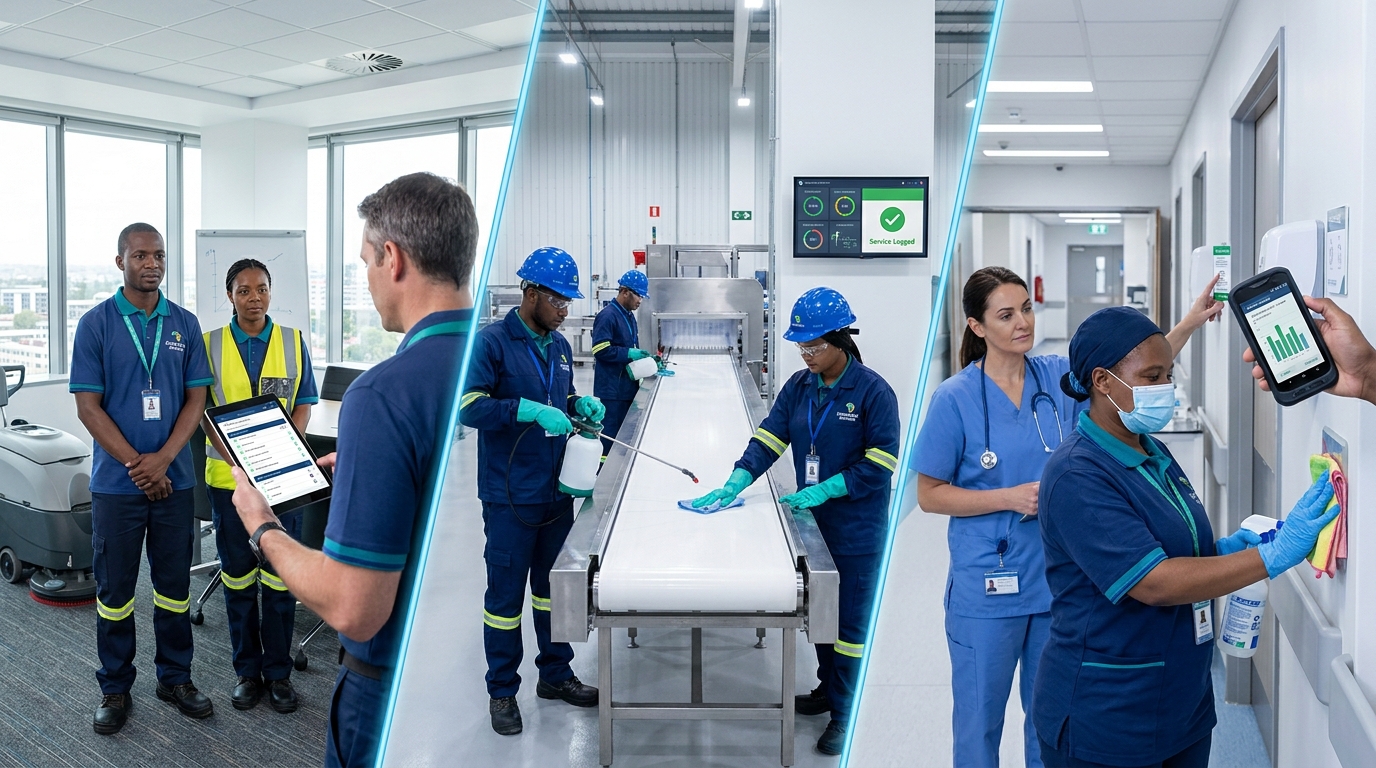
A professional cleaning partner brings structure, training, documentation, and accountability to every service visit. Below are three benefits of a professional cleaning service that turns hygiene management from an informal assumption into a verifiable, auditable system.
Standardised Cleaning Protocols
Professional cleaning companies operate according to documented service protocols. Every area of your facility is mapped, every task is defined, and every visit is executed against a clear standard. This means the output meets the same quality benchmark, no matter which team member services your site on a given day. Consistency is built into the system, not left to individual discretion.
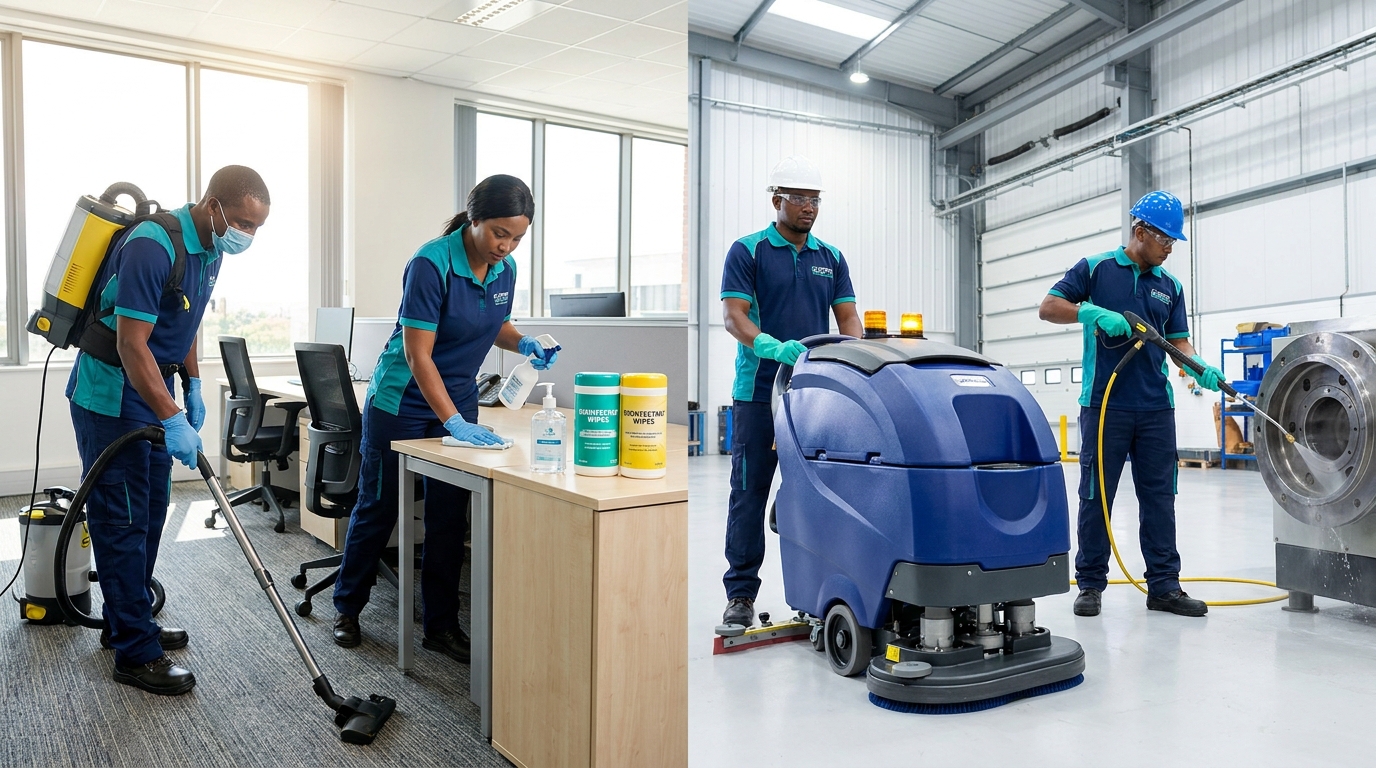
Protocols should be tailored to each environment, whether that is a corporate office, manufacturing facility, healthcare setting, or retail space. They can also be aligned with specific compliance requirements, so your cleaning supports your wider OHS and workplace hygiene compliance goals.
Documented Service Records
Every service visit should generate a documented record. Cleaning logs are completed and signed off, creating a clear, time-stamped audit trail that you can present during an OHS inspection at any time. This documentation shows that cleaning was carried out consistently, systematically, and in line with a defined programme.
For decision-makers, this is one of the most tangible compliance benefits of outsourcing. You are not relying on your own staff to maintain records around tasks that fall outside their primary roles. The accountability sits with a dedicated professional cleaning company, and the documentation proves it.
Trained, Equipped, and Compliant Staff
A professional cleaning company invests in thorough training for its teams. This includes:
- Hygiene and sanitation practices
- Chemical handling and safe storage
- Correct PPE use
- Workplace safety protocols in occupied environments
This training should be ongoing and documented. If an inspector asks for evidence of staff competency in chemical handling or other risk areas, those records can be provided. That documentation supports your broader OHS compliance.
How to Choose the Right Professional Cleaning Partner for OHS Compliance
Not every cleaning company is equipped to support compliance. Choosing the wrong provider can leave you with the same documentation gaps and liability exposure you were trying to avoid. When evaluating a professional cleaning partner for OHS compliance purposes, ask the following questions:
- Can they provide sample cleaning logs and service records? If they cannot show you what their documentation looks like before you appoint them, they are unlikely to produce it consistently once contracted.
- Do they carry their own public liability insurance? This is a basic indicator of a professionally operated business and protects you in the event of an incident on site.
- How do they handle chemical safety? Ask specifically about safety data sheet management, PPE provision, and what training their staff receive before working with hazardous cleaning products.
- Are their staff formally employed and designated as cleaners? This matters for both labour law compliance and OHS accountability. Informally assigned workers create liability gaps that a professional provider closes.
- Can they tailor their service to your specific facility type and risk profile? A manufacturing floor, a healthcare setting, and a corporate office have different compliance requirements. A capable partner will reflect that in their service specification.
- Do they have a process for reporting hazards or hygiene risks they identify during a visit? A good cleaning partner does not simply clean and leave. They act as an additional set of eyes on the facility and flag issues before they become incidents.
These questions separate a capable compliance partner from a company that simply provides a cleaning service.
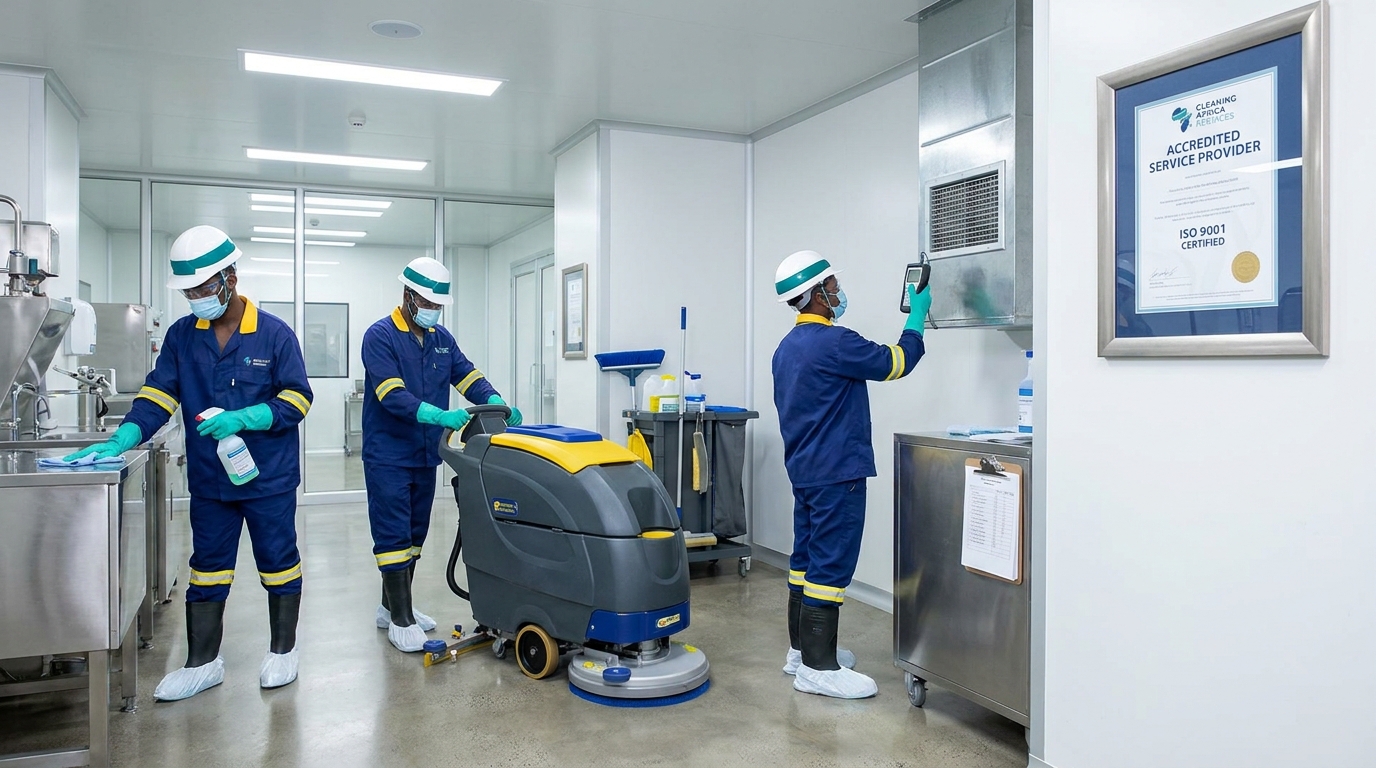
Accreditation as Proof of Compliance-Grade Delivery
Not all cleaning companies are equipped to deliver compliance-grade services. The key differences often lie in accreditation, quality management systems, and a clear commitment to professional standards.
Look for the following three indicators:
- ISO 9001 quality management certification to show consistent, documented processes and continuous improvement.
- Affiliation with industry bodies such as the National Contract Cleaners Association (NCCA) to confirm adherence to industry standards and ethical practices.
- Recognised B-BBEE status that supports your own transformation and procurement compliance objectives.
These accreditations and memberships indicate operational systems that match the rigour required for professional cleaning and OHS compliance.
A Comparison: In-House Cleaning Versus a Professional Cleaning Partner
| Compliance Factor | In-House / Ad Hoc Cleaning | Professional Cleaning Partner |
|---|---|---|
| Documented cleaning schedules | Rarely maintained | Produced and signed off at every visit |
| Chemical handling compliance | Dependent on individual staff knowledge | Governed by training and documented safety data sheet protocols |
| Staff training records | Usually absent or informal | Maintained and available for audit |
| Consistency of output | Varies by person and workload | Standardised to a defined service protocol |
| Audit readiness | Documentation gaps expose the business | Records available on request at any time |
| Employer liability | Employer carries full risk for untrained staff handling chemicals | Liability sits with the cleaning company under a formal contract |
| Coverage of high-risk areas | Inconsistent, often missed | Mapped into the service scope from the outset |
Partner with Cleaning Africa Services for Workplace Hygiene Compliance
Cleaning Africa Services understands that choosing a cleaning partner is a serious compliance decision. When you appoint a service provider, you are putting your name behind a system that represents your business every day in every area of your facility.
If you are ready to move from assumption to assurance with professional cleaning, request a free quote from Cleaning Africa Services and put a compliant, auditable hygiene programme in place.