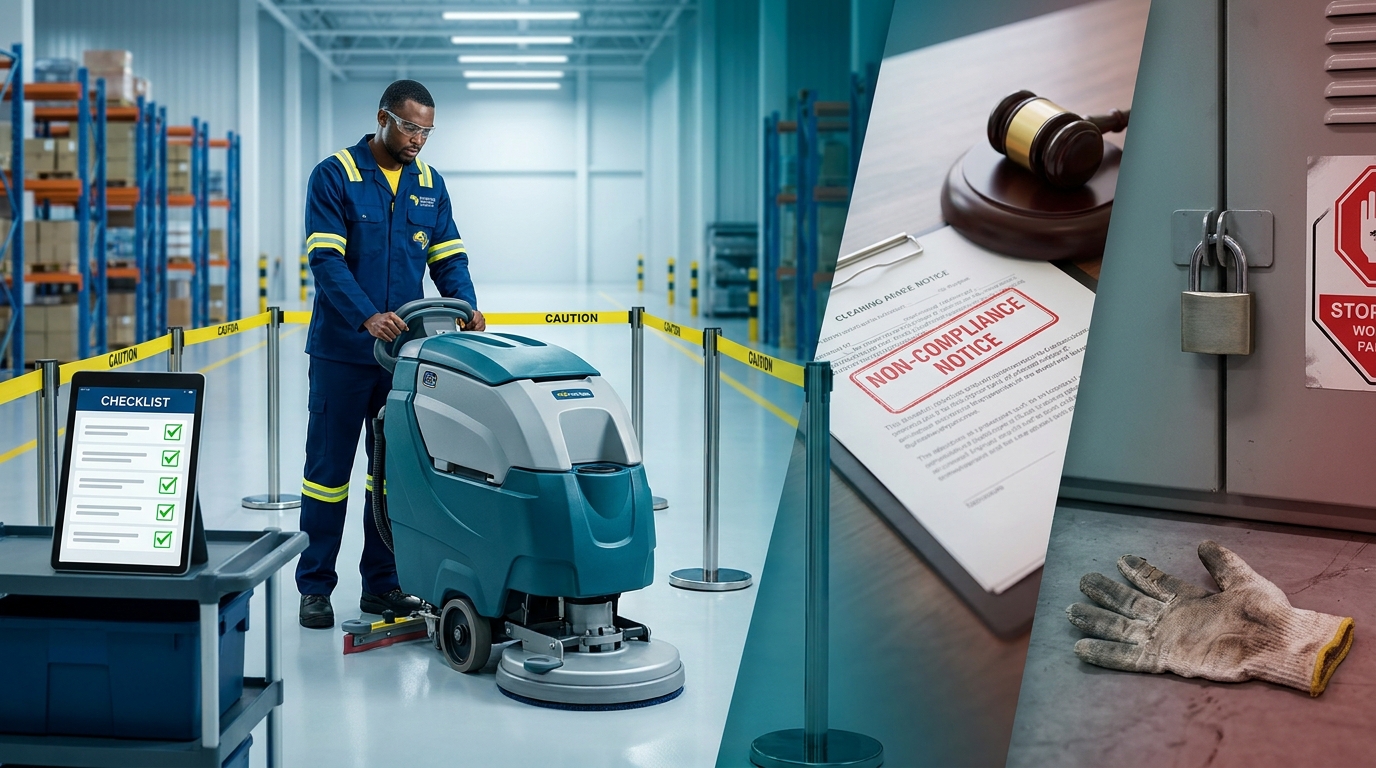
For any organisation in South Africa, OHS Act compliance in the workplace is not optional. It is a legal requirement with real consequences if you get it wrong. The Occupational Health and Safety Act, Act 85 of 1993, puts clear duties on employers to keep working environments safe and hygienic.
Cleanliness is one of the most visible signs of a safe workplace, yet it is often treated as a cost to cut instead of a standard to protect. That view can lead to failed inspections, enforcement notices, civil claims, and reputational damage. This guide explains how cleaning links directly to OHS Act compliance in the workplace, and what you should build into your cleaning and hygiene programme.
The Sections of The OHS Act That Directly Affect Cleaning and Hygiene
The Occupational Health and Safety Act (Act 85 of 1993) and its regulations set out employers’ duties to keep workplaces safe, and several parts affect cleaning and hygiene directly. Section 8 requires employers to maintain a working environment that is safe and without risk to health, which includes clean floors, controlled waste, and hygienic shared facilities.
Section 9 extends this duty to visitors, contractors, and the public, while Section 14 makes employees responsible for helping to maintain safe, clean conditions. The General Safety Regulations and Environmental Regulations for Workplaces then give practical detail on issues such as floor cleanliness, hazardous substances, ablution standards, and keeping passageways and emergency exits clear, all of which are central to OHS Act compliance in the workplace.
What Non-Compliance Looks Like in Practice
OHS Act non‑compliance is rarely the result of deliberate negligence. More often, it comes from weak systems. Cleaning is reactive instead of scheduled, responsibilities are unclear, and standards are assumed instead of written down. Inspectors see the same patterns again and again.
Dirty High‑Touch Surfaces
High-touch surfaces include:
- Door handles
- Lift buttons
- Shared equipment
- Countertops
- Tap fittings
These points collect germs quickly. When many people touch the same surfaces during the day, and there is no structured cleaning plan, the risk of illness is clear and predictable. Under Section 8, failing to sanitise high-touch surfaces regularly is a failure to maintain a safe environment. This is true at all times, not only during outbreaks such as COVID‑19.
Blocked Emergency Exits and Cluttered Passageways
One of the most common findings in OHS inspections is blocked or narrowed evacuation routes. This is often a mix of housekeeping and cleaning issues, for example:
- Boxes stacked near fire doors
- Waste bags left in corridors
- Cleaning tools or trolleys stored in passageways
The General Safety Regulations require that evacuation routes stay clear at all times. Any cleaning or facilities programme that supports OHS Act compliance workplace standards must treat clear passageways as a non‑negotiable task on every shift.
Pest Infestations
Pest problems, such as cockroaches, rodents, and flies, are both hygiene failures and direct health risks. They usually follow from poor cleaning, including:
- Food residue left in break rooms and canteens
- Waste bins not emptied on schedule
- Floor areas under and behind equipment not cleaned often enough
If an infestation develops over time, it is hard for an employer to claim they “did not know” about the risk. Regular, thorough cleaning is the main prevention measure. A documented cleaning programme also provides proof that the organisation is taking active steps toward Occupational Health and Safety Act cleaning requirements.
Biohazard Exposure
Some workplaces face higher risks from biohazards, for example:
- Healthcare facilities and clinics
- Laboratories
- Food-handling and food-processing areas
- Any site where bodily fluids or hazardous substances may be present
In these environments, incorrect cleaning, poor chemical use, or weak biohazard management creates serious occupational health risks. The OHS Act, together with the Hazardous Chemical Substances Regulations and Environmental Regulations for Workplaces, requires employers to control these risks in a systematic way. That includes non-negotiables such as trained teams, the right PPE, approved products, and written procedures.
Inadequate Ablution and Welfare Facilities
The Environmental Regulations for Workplaces set minimum standards for:
- Ablution facilities
- Change rooms
- Rest areas
Facilities that are not cleaned regularly, do not have soap and sanitary supplies, or fall into disrepair are in breach of these rules. Inspectors almost always check these areas. The condition of ablution and welfare facilities often reflects the overall approach to workplace compliance in South Africa.
Professional Contract Cleaning as a Systematic Compliance Solution
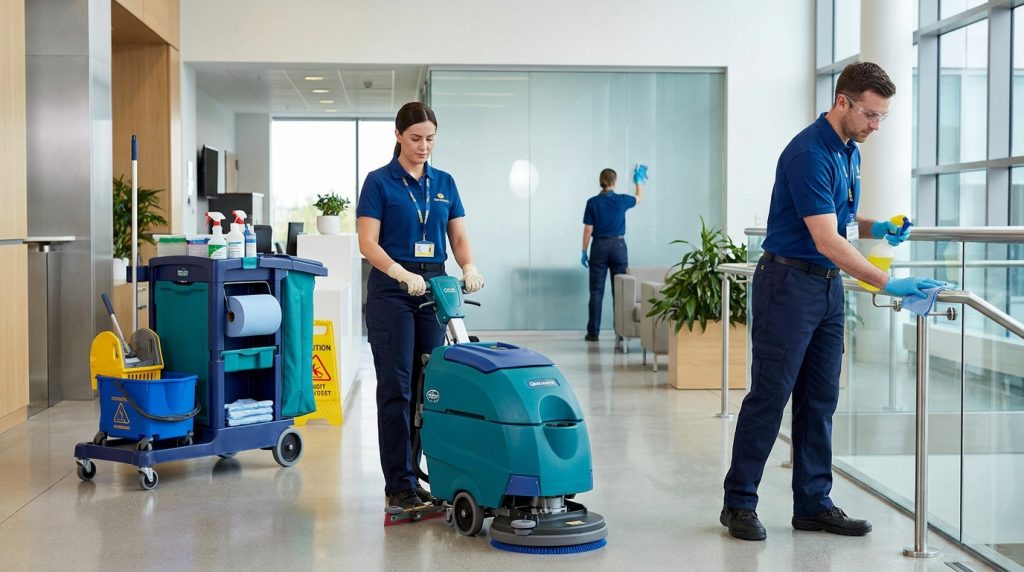
Managing OHS cleaning requirements with in‑house staff often leads to gaps. People are absent, priorities shift, and cleaning becomes reactive. It happens after someone complains about dirt, rather than on a set schedule that protects hygiene and safety.
Professional contract cleaning can help close these gaps and support consistent OHS Act compliance in the workplace.
Documented, Auditable Cleaning Schedules
A professional contractor should provide written cleaning schedules that set out:
- What areas and items are cleaned
- How often each task is done
- Who is responsible
- What standard or method must be followed
These records form key evidence of compliance. During an OHS inspection or an investigation after an incident, dated and signed cleaning logs help show that the employer has actively maintained the workplace. Proper documentation supports both legal defence and continuous improvement.
Trained Teams with the Right Equipment and Products
Workplace compliance in South Africa depends not only on cleaning frequency, but also on trained teams who use the right methods. The right approach includes:
- Using approved products suited to each surface and risk level
- Understanding the difference between cleaning, sanitising, and disinfecting
- Applying stronger controls in higher‑risk environments, such as healthcare, food preparation, and some industrial sites
Using the wrong product or method can damage surfaces, spread contamination, or fall short of Occupational Health and Safety Act cleaning expectations.
Hazardous Waste Management and Biohazard Protocols
Where hazardous waste or biohazardous materials are present, a compliant waste management programme should include:
- Clear procedures for handling and separating hazardous waste
- Correct containers and labelling
- Safe storage and disposal routes
- Appropriate PPE for staff
- Training on spills, accidents, and emergency response
These elements must align with the OHS Act and its associated regulations. They protect workers, visitors, and the organisation’s legal standing.
A Broader View of Compliance and Risk
Contract cleaning is sometimes treated as a simple appearance issue. In reality, it is closely linked to:
- Legal compliance with the OHS Act and related regulations
- Protection against civil claims and reputational damage
- Business continuity, by reducing health risks and operational disruption
Seen this way, professional contract cleaning is not just a cost. It is a risk management function and a key enabler of OHS Act compliance in the workplace.
Make Compliance Part of Your Cleaning Contract
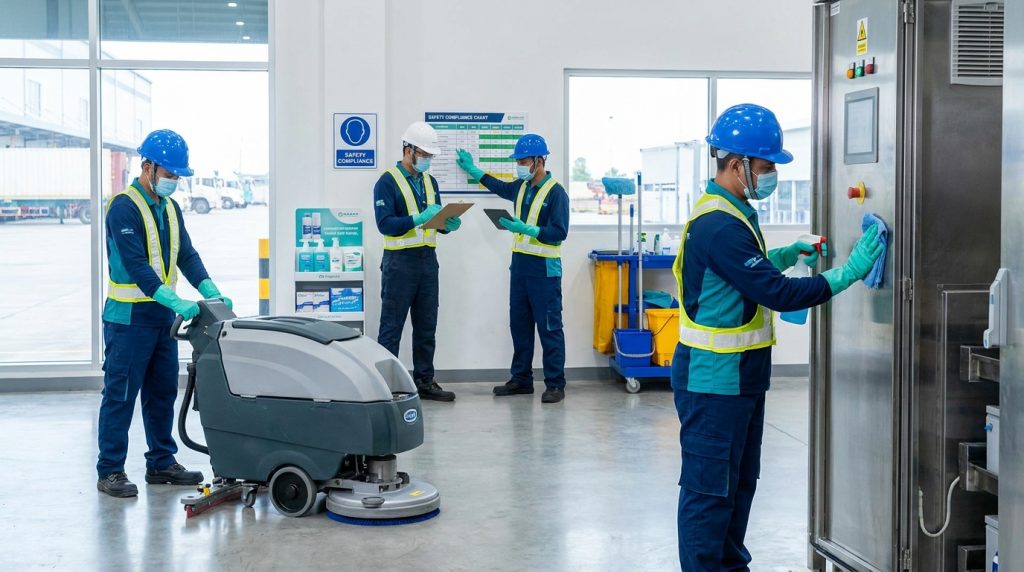
At Cleaning Africa Services, we combine scale with attention to detail. Our teams build cleaning programmes around your specific OHS Act compliance obligations, your operational needs, and the standards you want to uphold across your sites.
If you want a cleaning partner that treats compliance as seriously as appearance, request a free quote.