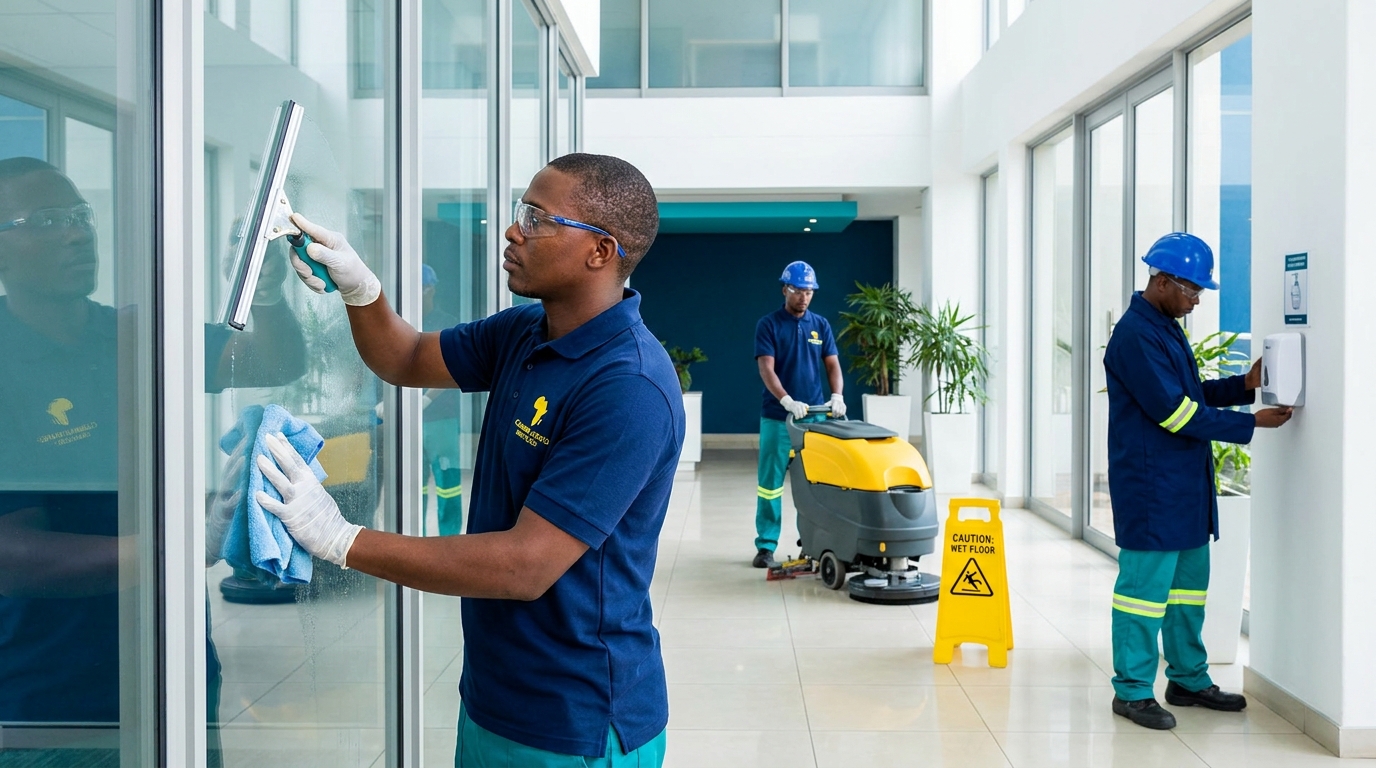
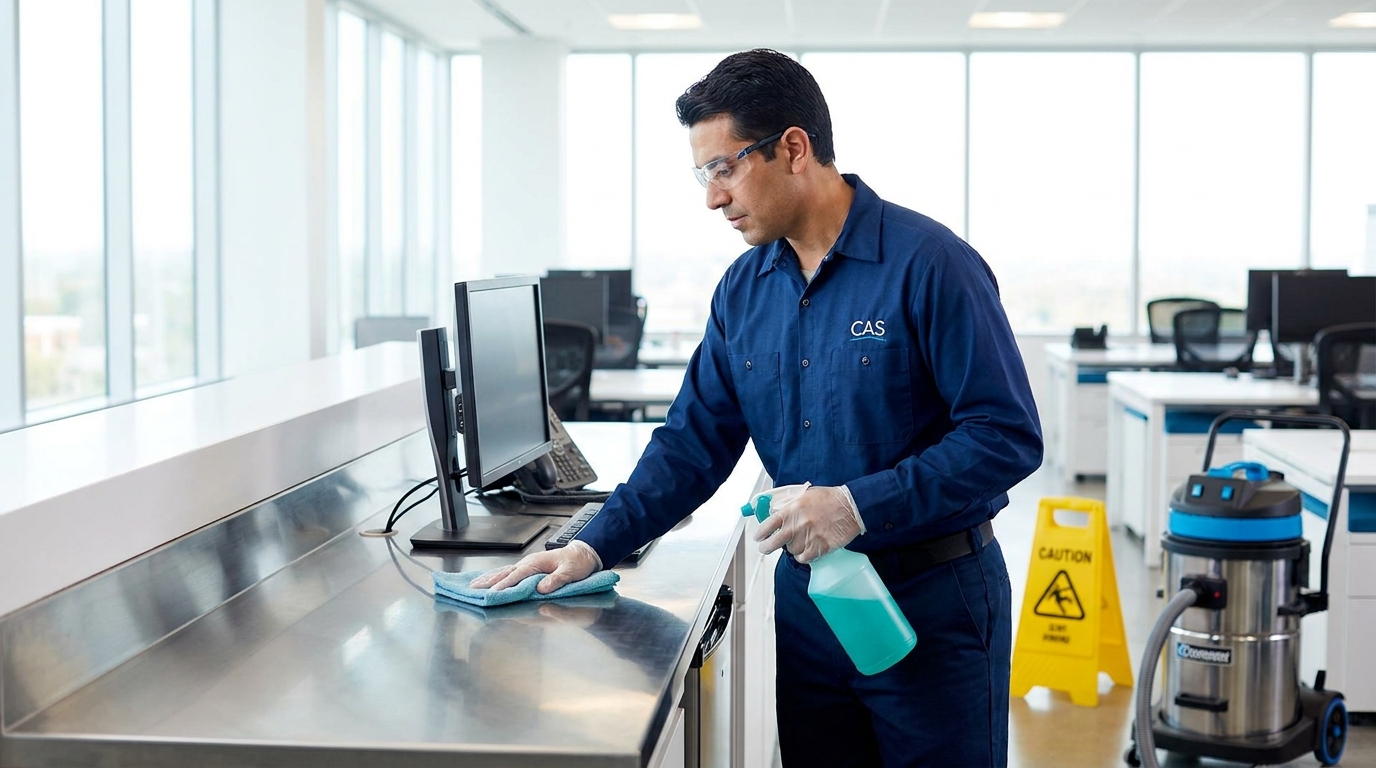
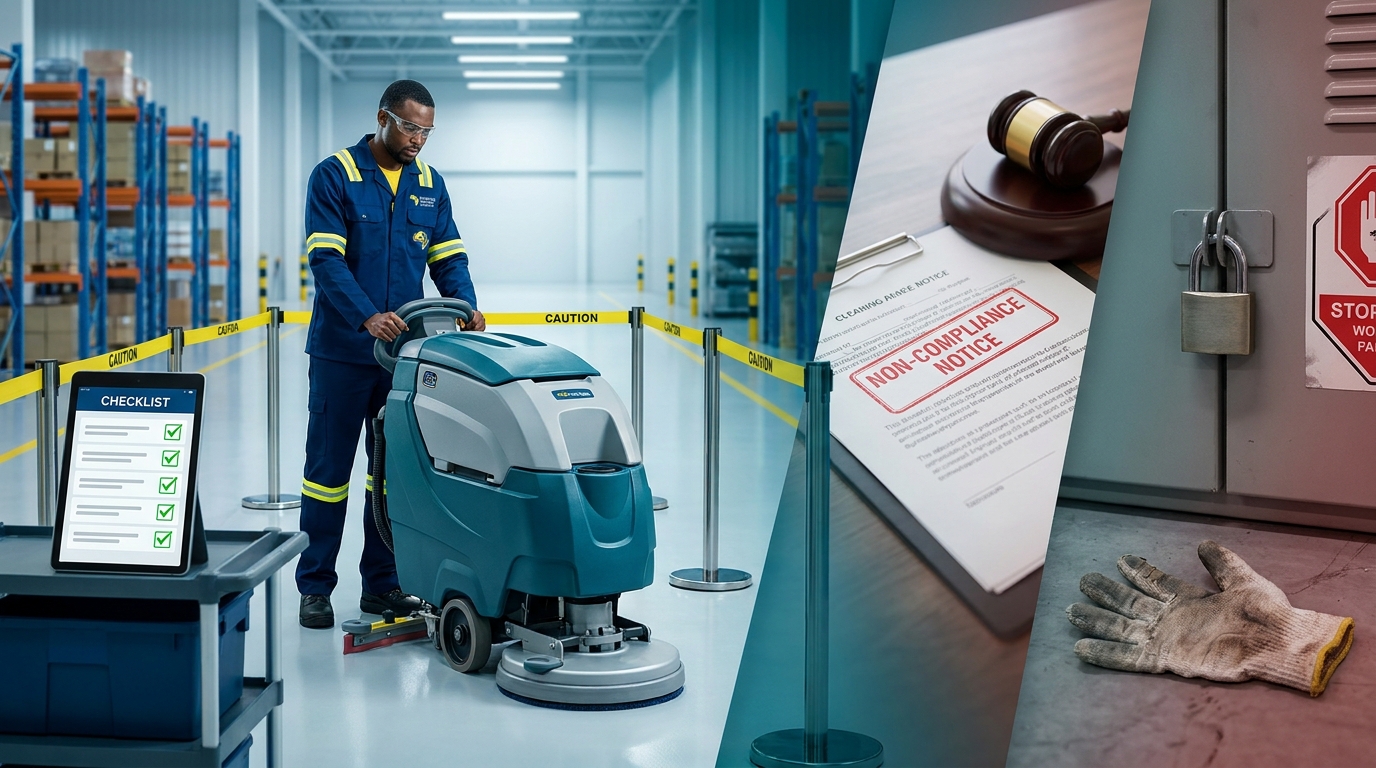
The essential role of a clean workspace in maintaining a healthy and productive environment is often overlooked. South Africa’s General Safety Regulations, published under the Occupational Health and Safety Act 85 of 1993 and updated in 2025, set legally binding requirements that directly shape how workplace cleaning must be planned and executed. These regulations mandate essential systems like risk assessments, appropriate PPE, and the safe storage and use of cleaning substances to prevent workplace slips and falls.
This article will simplify the regulations and show you how to leverage them for a safer, healthier workplace.
What Are the General Safety Regulations?
The General Safety Regulations (GSR) are a set of legally enforceable rules issued under the Occupational Health and Safety Act 85 of 1993 (the OHS Act). They apply to virtually every workplace in South Africa and set the minimum standards employers must meet to protect the health and safety of their employees and anyone else on their premises.
For cleaning operations specifically, the most relevant provisions cover:
- Risk assessments: Employers must evaluate any condition that could cause injury or harm, including those created or encountered during cleaning activities.
- Housekeeping and floor maintenance: Indoor work areas must be properly maintained. The regulations specify that at least 2.25 square metres of open floor space must be available per employee, and workspaces must be kept clean and free of obstruction.
- Personal Protective Equipment (PPE): Employers must supply appropriate PPE at no cost to employees and ensure workers are trained in its correct use.
- Chemical and substance safety: Cleaning chemicals must be correctly labelled, stored, and handled in accordance with their Safety Data Sheets (SDS).
- Fire safety and emergency egress: Exits, fire equipment, and evacuation routes must never be obstructed, including by cleaning equipment or supplies.
- Intoxication prohibition: No employee may work while under the influence of alcohol or any substance that could impair their ability to work safely.
- First aid: Adequate first aid facilities must be available and accessible at all times, including during cleaning shifts.
Understanding these provisions is not optional. Non-compliance exposes your business to legal liability, fines, and, most importantly, preventable harm to your people.
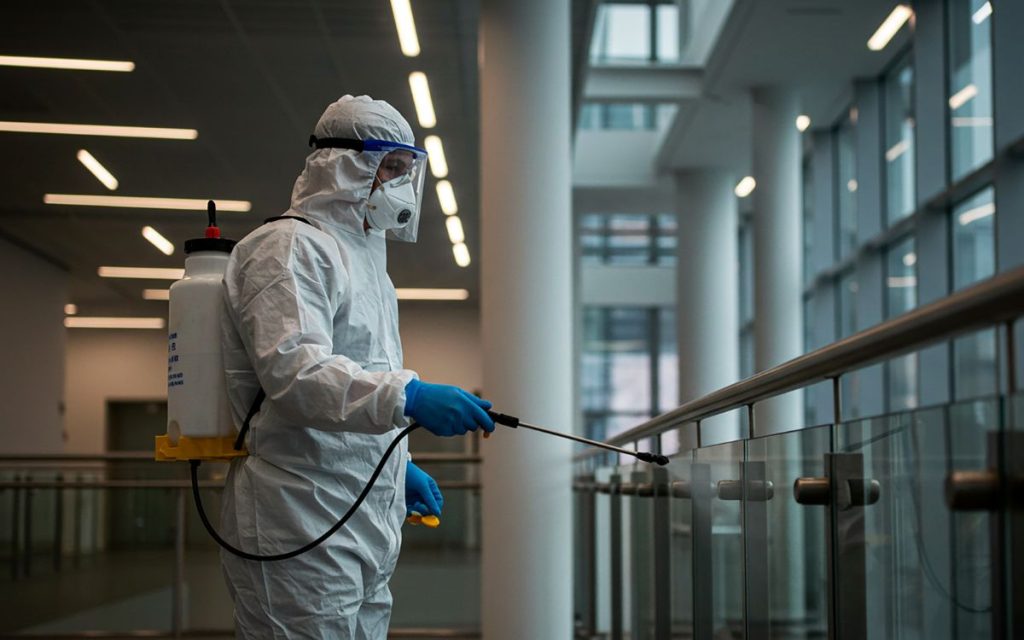
What Do the General Safety Regulations Require From Employers?
A question we hear often is: what exactly does the law require me to do? The GSR place the primary duty of compliance on the employer. Here is a plain-language breakdown of what that means in practice for businesses that use cleaning staff or contract cleaning services.
- Conduct a documented risk assessment. You must identify every hazard in the workplace, including those related to cleaning chemicals, wet floors, and equipment. This assessment must be reviewed regularly and updated when conditions change.
- Provide and maintain a safe working environment. This includes adequate lighting, ventilation, and floor space, as well as a workspace that is kept clean and orderly at all times.
- Supply PPE free of charge. Every cleaning employee must receive the correct PPE for their tasks. You cannot pass this cost on to workers.
- Ensure adequate training. Employees must understand how to use their PPE, handle cleaning chemicals safely, respond to spills and emergencies, and follow the cleaning procedures relevant to their role.
- Maintain accessible emergency exits. Fire exits and evacuation routes must remain clear at all times. This is a non-negotiable requirement that your cleaning team must understand and uphold during every shift.
- Keep records. Incident reports, risk assessments, and training records must be documented and available for inspection.
If you use a contracted cleaning service, you remain responsible for ensuring that the service provider operates in compliance with these requirements on your premises. This is why choosing a compliant, professional cleaning partner matters far beyond cost.
General Safety and Cleaning Regulations Include Awareness and Prevention
Understanding safety regulations is the first step, but putting them into practice is where a proactive cleaning strategy truly shines. This focuses on a two-pronged approach: awareness and hazard mitigation. Your cleaning team is on the frontline, and their ability to recognise and prevent risks is important for a safe working environment.
The Power of Awareness
Awareness is more than identifying dirty areas. It means your cleaning team can spot a potential hazard before an accident happens. For example, a cleaner might notice a liquid spill near an electrical outlet. Their training should prompt them to address this immediate risk by not only cleaning the spill but also alerting management to the electrical hazard.
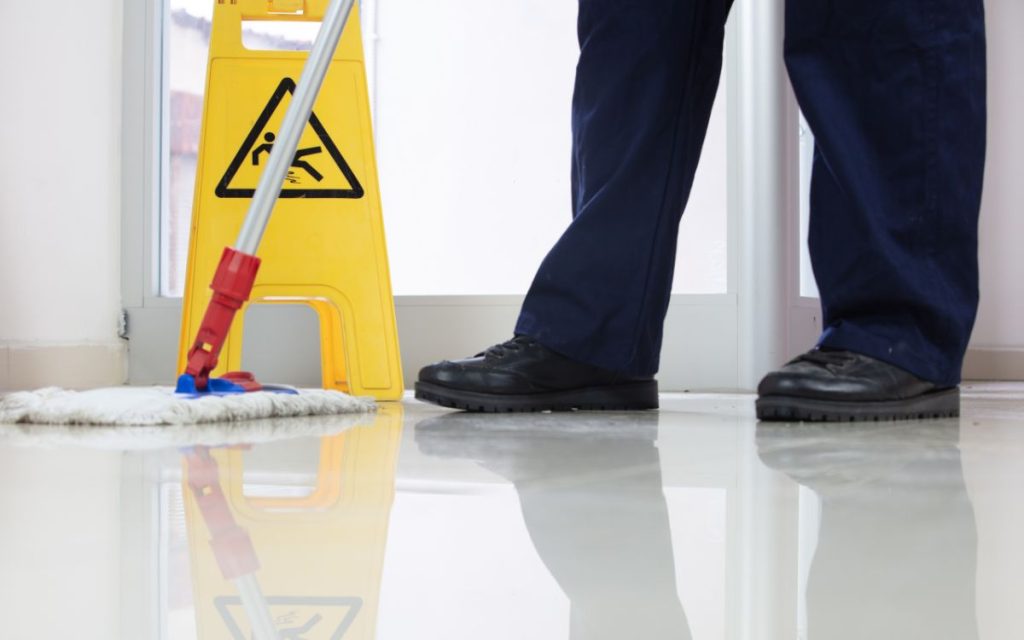
During cleaning, they should use clear signage and barriers, like a “Wet Floor” sign, to communicate temporary risks to others.
Proactive Hazard Mitigation
Proactive hazard mitigation means taking action to prevent problems. This involves more than just a quick wipe down. It means immediate and correct cleanup of spills to prevent slips and falls.
This also includes the identification and reporting of damaged equipment or infrastructure that poses a risk, such as a loose handrail or a frayed electrical cord.
Understanding and Following Established Procedures
A professional cleaning team follows established procedures to ensure consistency and safety. This includes using a documented cleaning schedule and checklist to ensure no area is overlooked, from high-traffic walkways to less-frequented storage rooms. It also means following established protocols for the proper dilution and use of cleaning chemicals, which prevents damage to property and protects the health of the cleaning staff and others.
The Role of Personal Protective Equipment in Cleaning
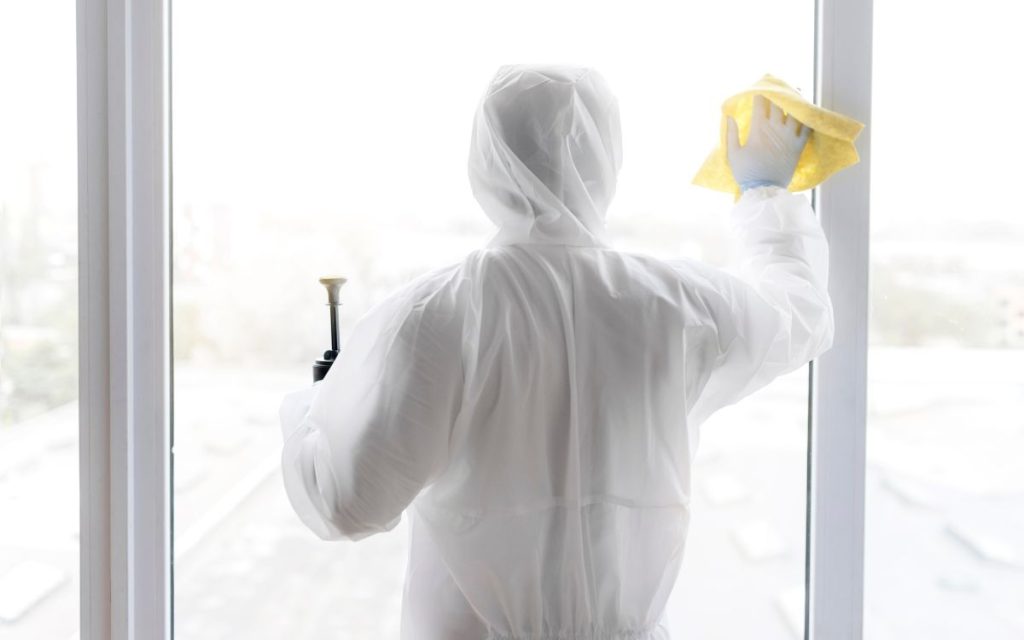
Personal Protective Equipment, or PPE, is an essential part of any cleaning operation. It is the last line of defence between a cleaner and potential harm from chemicals or other hazards. Selecting the right PPE and using it correctly is a critical requirement of the General Safety Regulations.
- Selecting the Right PPE for the Task: The choice of PPE must match the specific job. For example, a cleaner using a strong chemical to sanitise a bathroom needs chemical-resistant gloves and possibly a mask, while a cleaner using a mild, eco-friendly product may only need general-purpose gloves.
Understanding Safety Data Sheets (SDS) is vital in these cases. These documents, provided by the manufacturer or supplier, specify the required PPE for each chemical and are a legal requirement.
- Proper Use, Maintenance, and Storage: Simply having the correct PPE is not enough; it must be used correctly. This includes proper procedures for putting on and taking off gear to avoid contamination.
To make reusable PPE effective and hygienic, regulations mandate:
- Cleaning: The team must clean the PPE after each use to remove chemicals and dirt.
- Storage: Store PPE in a clean, dry place to prevent damage and re-contamination.
- Replacement: Regularly inspect PPE for wear and tear and replace it as needed.
Establishing Safe Habits: Workplace Cleaning Practices
Safety is built into daily routines and habits so that your workplace is not only clean but also safe and compliant. Let’s look at the importance of routine practices, from how cleaning materials are stored to how equipment is handled.
Maintaining a Clean and Organised Work Environment
An organised workplace is a safer workplace. Designating and using specific, well-labelled storage areas for all cleaning supplies is crucial to prevent accidents and confusion. It is also important to ensure that cleaning materials and carts do not obstruct walkways, fire exits, or fire equipment. These simple steps can prevent trips and falls, which are common and costly workplace injuries.
Using Tools and Equipment Properly
Proper training on all cleaning machinery is a must, from vacuums to floor buffers. A professional cleaning team must be trained to use equipment correctly and efficiently. This also involves regular inspection of equipment for damage or malfunction before use to ensure it is in good working order.
Safe Handling of Chemicals
A clear system for chemical labelling and storage prevents accidental mixing of substances, which can create dangerous fumes. Proper ventilation is also a key factor when using strong cleaning agents to prevent the buildup of hazardous vapours, protecting the health of the cleaning staff and others.
Regulation 6: What the Housekeeping Requirement Actually Means
Regulation 6 of the General Safety Regulations deals directly with housekeeping. It requires employers to keep the workplace clean, tidy, and free from accumulations of dirt, waste, or anything that could cause a hazard. For cleaning teams, this means that cleaning is not simply a service provided at set times during the day. It is an ongoing, legally required standard that must be maintained throughout all working hours.
In practical terms, this means your cleaning programme should include provision for reactive cleaning during the working day, not just scheduled deep cleans outside of business hours. High-traffic areas, washrooms, and food preparation spaces require attention at a frequency that reflects actual use, not just a standard weekly rotation.
Our post on cleaning standards covers how to set measurable benchmarks that align with these regulatory requirements.
Be Ready for Anything
Even with the best plans, emergencies can happen. This is why your cleaning crew must be ready to respond quickly and correctly. A strong safety protocol includes emergency preparedness that is directly linked to cleaning operations.
Know Emergency Procedures
Your cleaning team needs to know the correct response to an emergency. For example, if a container of a strong floor cleaner breaks, the team should know to immediately cordon off the area, use an absorbent material to contain the spill, and follow the specific cleanup instructions on the product’s SDS.
Have a Clear Chain of Command
A clear chain of command is crucial for any emergency cleaning response. Your team should have a clear protocol for immediately reporting any injuries or near-misses related to cleaning. For instance, if a cleaner slips on a wet floor but doesn’t get hurt, they should still report the incident.
This allows management to address the root cause, such as a lack of “Wet Floor” signage. They must also know who to contact for assistance during a cleaning-related emergency, whether it is a supervisor, a first-aid officer, or emergency services.
When an Emergency Becomes a Compliance Issue
Not all cleaning emergencies are simply operational inconveniences. Under the General Safety Regulations, an uncontrolled chemical spill, a flooding incident, or a fire hazard created by flammable cleaning products can constitute a legal non-compliance event. If an injury results from an emergency that your team was not prepared for, the employer bears liability.
This is why emergency cleaning is not just a reactive service. It is a planned capability that every workplace should have access to. Your cleaning partner should be able to respond to unplanned events quickly, with the right equipment, the right chemicals, and trained staff who understand their responsibilities under the OHS Act.
Build A Culture of Safety
The most effective cleaning safety strategy includes a strong safety culture. This means every person in the workplace, from management to the cleaning crew, understands their role in maintaining a secure environment. Below are two key elements of a strong safety culture.
- Staff Training: Regular cleaning training is a must for all staff, including your cleaning team. This includes refresher sessions on updated cleaning protocols and safety regulations. It’s also important to create a supportive environment where staff can openly communicate any safety concerns without fear.
- Commitment to Compliance: When leadership shows a real commitment to compliance, it sets the tone for the entire company. This encourages everyone to take ownership of safety.
People Also Ask: Common Questions About the General Safety Regulations
What are the GSR regulations?
The GSR (General Safety Regulations) are the rules published under the Occupational Health and Safety Act 85 of 1993 that set minimum safety standards for South African workplaces. They cover risk assessments, housekeeping, PPE, chemical handling, fire safety, and emergency preparedness. The regulations were most recently amended in 2025.
What are the five rights of employees under the OHS Act?
South African employees have several key rights under the OHS Act and the General Safety Regulations. These include the right to a safe working environment, the right to be informed of hazards and risks, the right to receive PPE at no cost, the right to refuse work that poses imminent danger, and the right to participate in health and safety structures in the workplace. For cleaning staff in particular, these rights mean their employer or cleaning contractor must provide proper training, appropriate protective equipment, and safe working procedures before any cleaning task is carried out.
What are the basic safety rules that apply to cleaning operations?
While the regulations are comprehensive, the core safety rules most relevant to cleaning are: always use the correct PPE for the task; never mix cleaning chemicals unless the SDS specifically permits it; display wet floor signage immediately when creating a slip hazard; keep fire exits and emergency routes clear at all times; report any near-miss or incident before the end of the shift; and store all chemicals in labelled, secure, purpose-designated areas.
Create a Strategic Approach to Your Workplace Cleaning Protocols
When you approach your workplace cleaning protocols through the lens of the General Safety Regulations, you start to build a more productive, healthier, and ultimately more profitable workplace. Don’t leave your company’s safety to chance. Contact us to ensure your cleaning protocols are a true asset to your business.