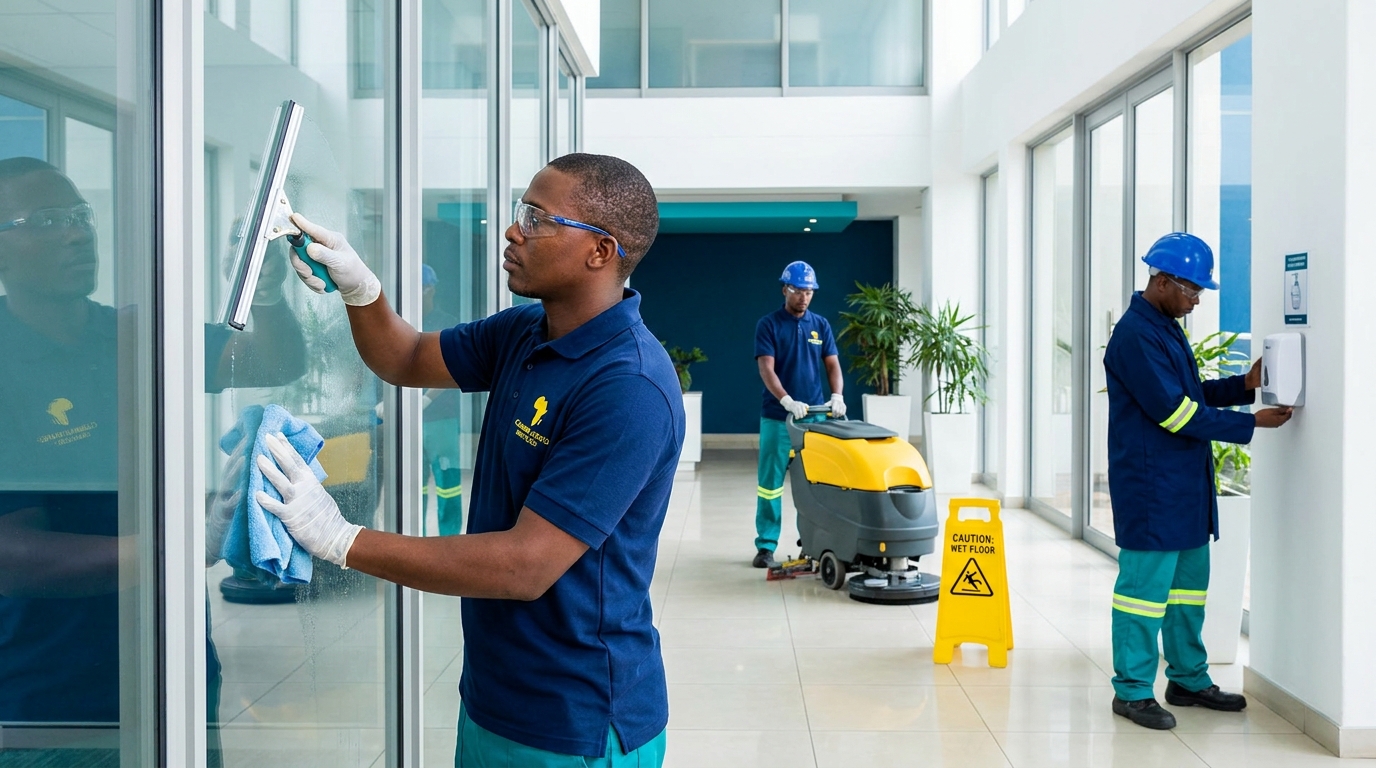
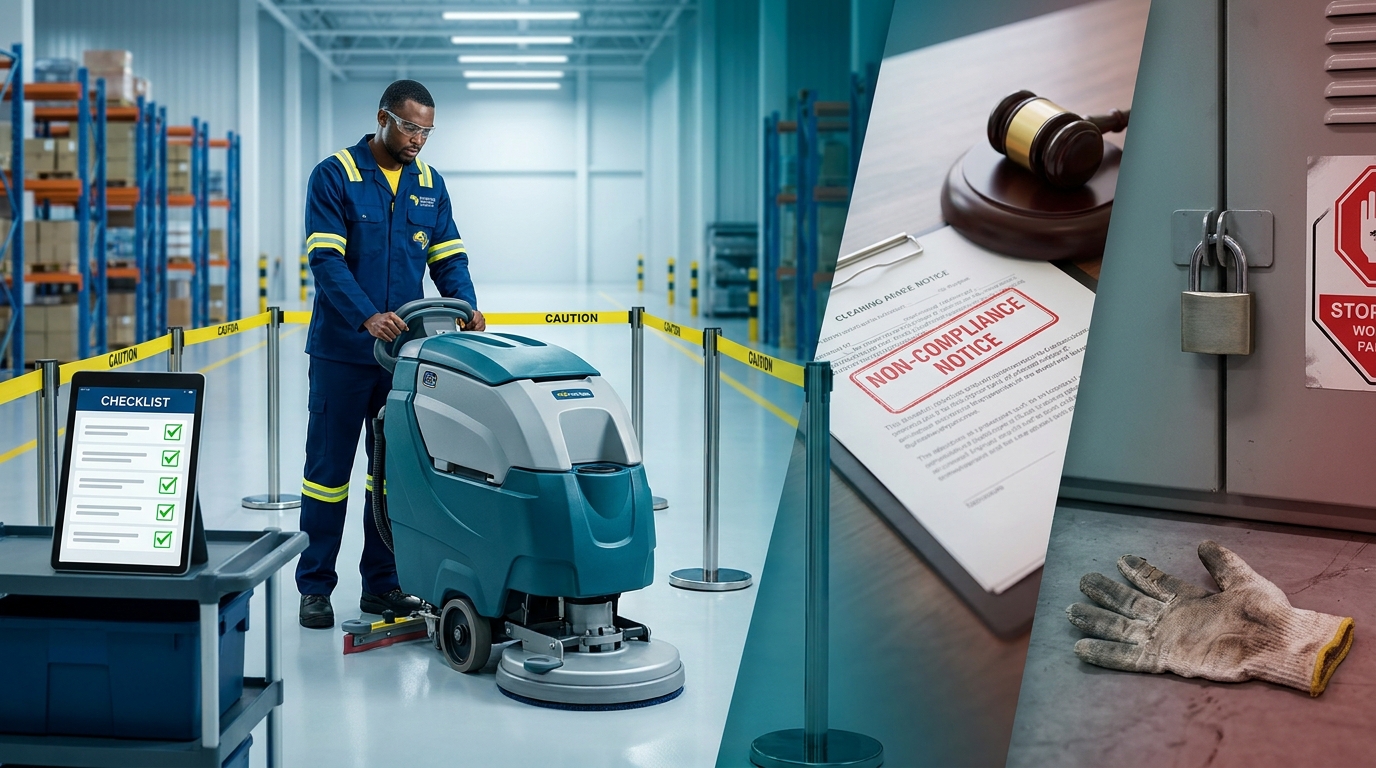
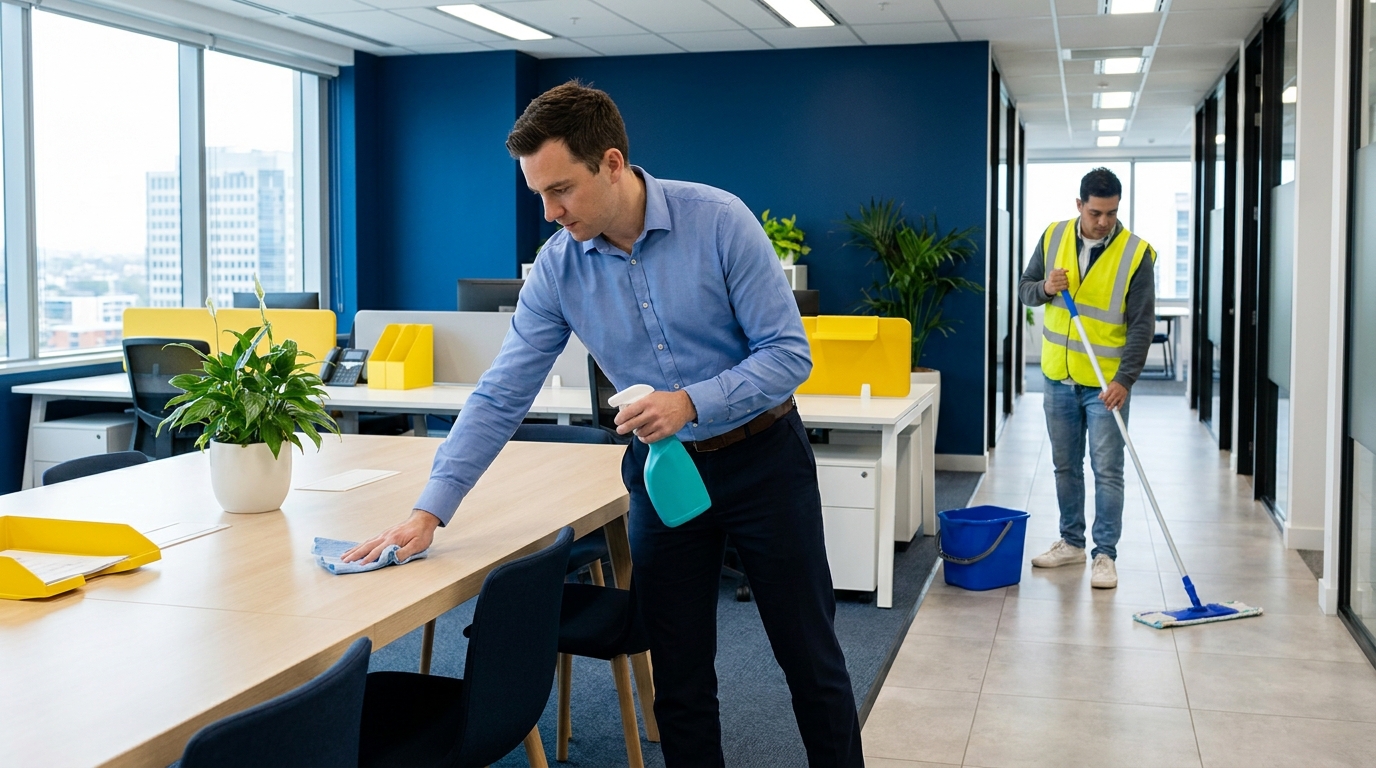
Many South African businesses still see deep cleaning as an occasional task that happens only when the workplace starts to look neglected. Under the Occupational Health and Safety Act (No. 85 of 1993), deep cleaning OHS compliance in South Africa is part of your legal duty, not a once-off visual fix.
This is especially true for high-risk environments such as manufacturing plants, food production facilities, healthcare settings, and logistics warehouses. In these workplaces, periodic, documented deep cleaning is essential to protect employees, avoid penalties, and reduce the risk of costly operational shutdowns.
What the OHS Act Says About Workplace Hygiene
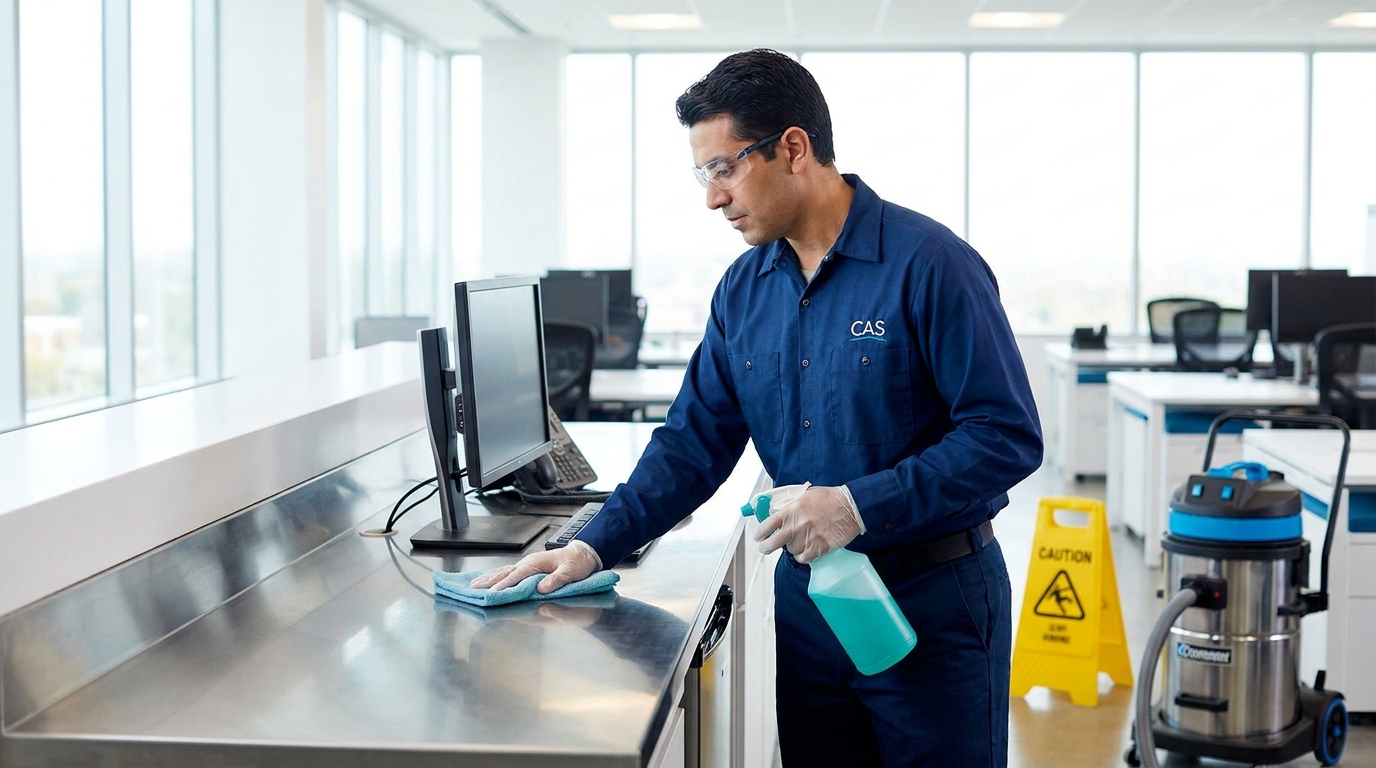
Illustration: What the OHS Act Says About Workplace Hygiene
The Occupational Health and Safety Act requires employers to keep workplaces safe and hygienic, even though it does not name “deep cleaning” directly. Section 8 sets the general duty to remove health risks, while the General Safety Regulations and Facilities Regulations, together with food hygiene laws, require clean, well-maintained work areas, facilities, and food premises.
In practice, this means routine surface cleaning is not enough to meet OHS Act hygiene requirements, and periodic deep cleaning is needed to control build-up that daily tasks do not reach.
Which Sectors Face the Highest Compliance Risk?
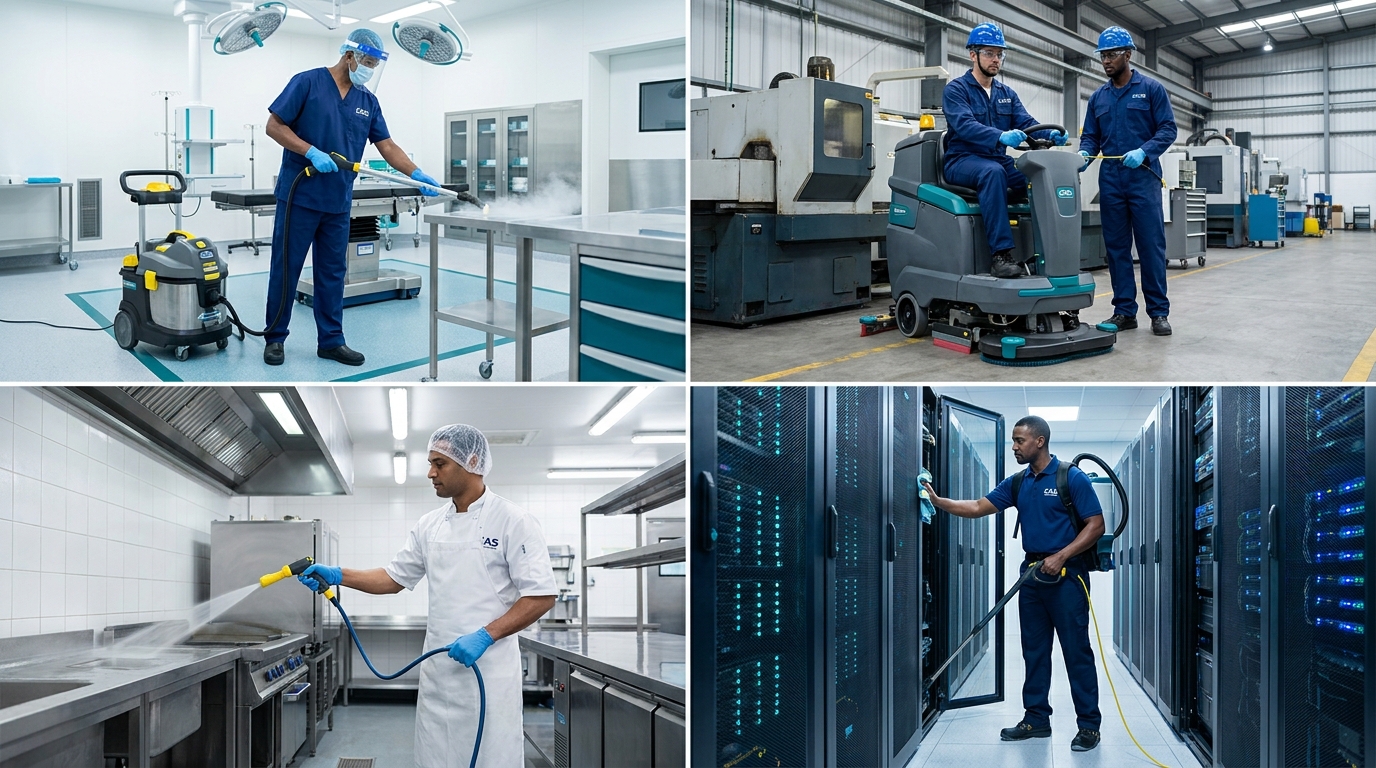
Illustration: Which Sectors Face the Highest Compliance Risk?
Every workplace in South Africa is subject to the OHS Act. However, the four sectors below carry higher risk if deep cleaning is neglected and if scheduled deep cleaning workplace programmes are not in place.
Manufacturing and Industrial Facilities
Industrial environments quickly accumulate grease, chemical residue, dust, and particulate matter. Routine cleaning alone cannot manage these risks. Industrial deep cleaning safety in these settings means focusing on equipment surrounds, overhead structures, floors, drainage channels, and extraction systems. If left untreated, these areas can become fire hazards or health risks.
Food Production and Processing
Food businesses face compliance duties under both the OHS Act and food safety legislation. Bacteria thrive in food residue that gathers in hard-to-reach areas. A compliant deep clean in these environments includes cold rooms, food contact surfaces, production line equipment, drainage systems, and canteen areas.
Healthcare and Clinical Settings
Hospitals, clinics, and care facilities must meet some of the most rigorous hygiene standards in any sector. Deep cleaning in healthcare settings supports pathogen control, limits cross-contamination, and ensures the sanitisation of high-touch surfaces, patient areas, and ventilation systems.
Logistics and Warehousing
High foot traffic, vehicle movement, and frequent handling of goods make warehouses prone to dust build-up, pest harbourage, and contamination. In these environments, scheduled deep cleaning workplace programmes are essential to maintaining a safe, compliant operation and to supporting long-term OHS compliance.
What a Compliant Deep Clean Must Cover
A compliant deep cleaning programme targets the areas, systems, and surfaces that collect contamination over time. It must also be documented so that it can serve as proof of compliance.
Here is what a properly structured scheduled deep cleaning workplace programme should address across these eight areas:
1. Ventilation and Air Handling Systems
Ducting, vents, and air handling units collect dust, mould spores, and biological debris. These systems directly affect air quality and can spread contaminants throughout your facility if they are not cleaned. Maintaining these systems helps you meet the duty to provide a safe environment under the OHS Act.
2. High-Touch Surfaces
Door handles, light switches, control panels, handrails, and shared equipment are among the highest-risk surfaces for pathogen transfer. A deep clean involves systematic disinfection of every high-touch point, not just those in obvious view.
3. Restrooms and Ablution Facilities
The OHS Act’s General Safety Regulations require that sanitation facilities be kept in a hygienic condition. Deep cleaning of restrooms goes beyond daily sanitisation. It includes descaling, grout cleaning, deep drain treatment, and the disinfection of all fixtures and fittings.
4. Canteen and Food Preparation Areas
Employee canteens and food preparation areas must meet hygiene standards for food-handling environments. Deep cleaning in these areas covers appliances, extraction hoods, tile grout, refrigeration units, and all food contact surfaces.
5. Industrial Equipment Surrounds
The areas around and beneath heavy equipment collect grease, product spillages, and organic waste. These build-ups create slip hazards, fire risks, and pest attractants. All of these fall within the employer’s duty of care. Deep cleaning of equipment surrounds should be scheduled regularly and documented.
6. Floors, Drainage, and Structural Surfaces
Grout lines, expansion joints, drainage channels, and structural ledges collect contaminants that routine mopping does not remove. A compliant and professional deep clean uses suitable machinery and chemicals to restore these surfaces to a hygienic standard.
7. Cold Rooms and Controlled Environments
Cold storage facilities present specific deep cleaning challenges, especially in food and pharmaceutical environments. Mould growth, ice build-up, and condensation must be managed with products and techniques that suit controlled temperature environments.
8. Storerooms and Seldom-Used Spaces
Storerooms, plant rooms, and seldom-used areas are often missed in routine cleaning. Over time, they can become important sources of pest harbourage and biological build-up. A complete deep cleaning programme includes these areas in the schedule.
How Often Does the Law Require Deep Cleaning?
The OHS Act does not set a single deep cleaning frequency for all workplaces. Instead, the duty is framed around what is reasonably practicable to maintain a safe and hygienic environment. This means your deep cleaning schedule should match the nature of your operations, your level of contamination risk, and the specific regulations that apply to your sector.
As a practical guide:
-
Food production facilities: Deep cleaning of production areas is often required monthly or quarterly. Some high-risk areas may need more frequent treatment.
-
Healthcare environments: Terminal deep cleans are required after specific events. Scheduled deep cleans are often carried out quarterly or more often in high-dependency areas.
-
Manufacturing and industrial sites: Quarterly deep cleans are a common starting point. High-grease or high-particulate environments may need more frequent cleans.
-
Offices and logistics facilities: Bi-annual deep cleans are usually suitable, although high-traffic areas might require extra attention.
Whatever frequency you adopt must be documented. Records of when deep cleans were done, who performed them, and which areas were covered are your evidence of compliance if there is an OHS inspection or an incident investigation.
The Role of Documentation in OHS Compliance
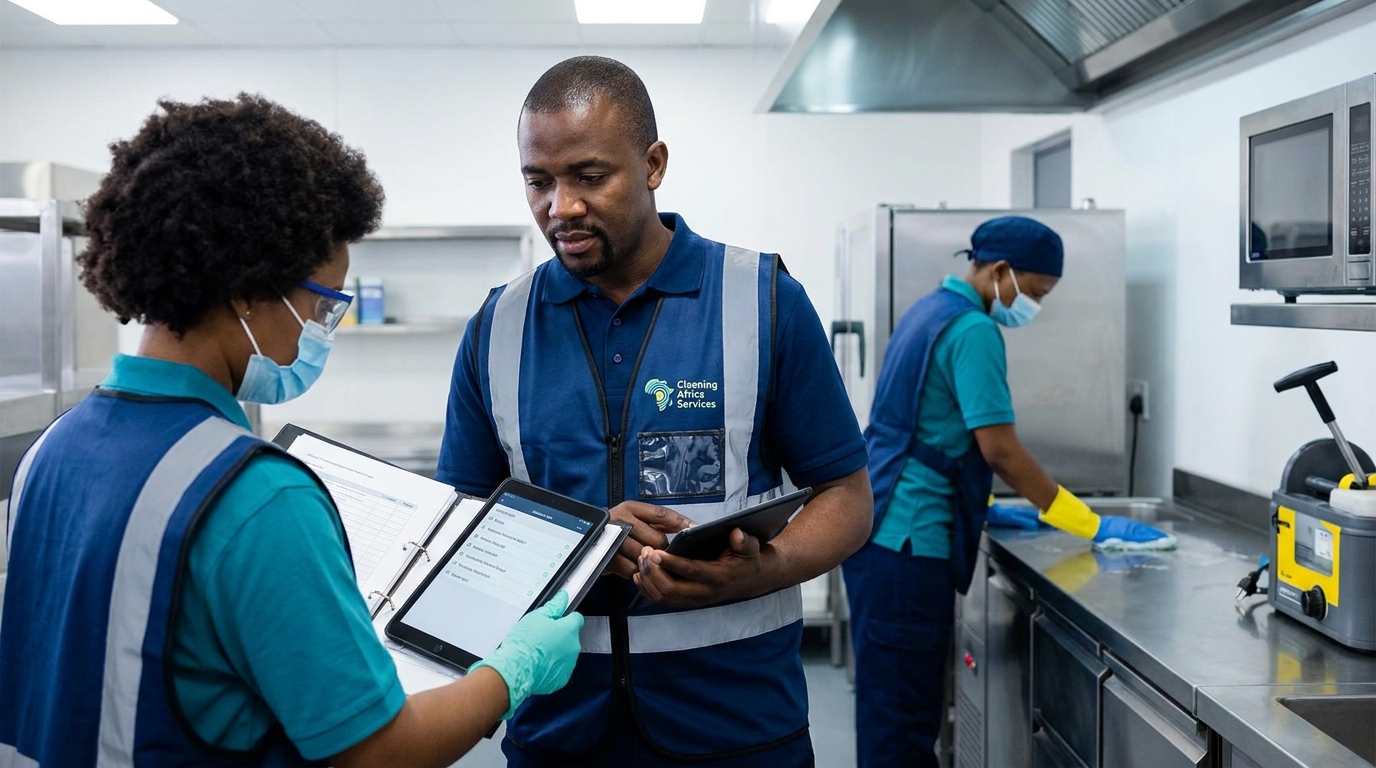
Illustration: The Role of Documentation in OHS Compliance
In many cases, the main gap in hygiene compliance is not the cleaning itself but the lack of proper records. Inspectors from the Department of Employment and Labour need to see clear evidence that your obligations are being met on an ongoing basis.
A professional deep cleaning provider should supply at least five core documents:
-
Detailed scope of work documentation before each clean
-
Signed completion reports that specify areas cleaned and chemicals used
-
Safety Data Sheets (SDS) for all chemicals used on site
-
Risk assessments for the cleaning activities performed
-
A scheduled cleaning programme that can be presented during inspections
When these records are stored and updated, they support deep cleaning compliance in South Africa and help prove that your programme meets OHS Act hygiene requirements.
A Quick Compliance Checklist for South African Businesses
Use this 10-point checklist to review whether your current cleaning programme supports OHS Act hygiene requirements and industrial deep cleaning safety:
☐ Do you have a documented deep cleaning schedule in place?
☐ Are ventilation and air handling systems included in your programme?
☐ Are restrooms and ablution facilities deep cleaned beyond daily sanitisation?
☐ Are canteen and food preparation areas compliant with food hygiene regulations?
☐ Are equipment surrounds, drainage, and structural surfaces included?
☐ Do you have signed completion reports for every deep clean performed?
☐ Are Safety Data Sheets available for all cleaning chemicals used on site?
☐ Is the frequency of your deep cleaning appropriate for your sector and risk level?
☐ Are your deep cleaning providers trained in industrial deep cleaning safety?
☐ Could you produce your cleaning records in the event of an OHS inspection today?
If you answered no to any of the above, it is time to review your programme and consider a more structured, scheduled deep cleaning workplace plan.
Gain Full OHS Compliance
Deep cleaning is not only about how your workplace looks. It is about protecting people, meeting legal duties, and maintaining a safe, efficient operation that can stand up to OHS inspections.
If you need support with deep cleaning OHS compliance in South Africa, Cleaning Africa Services can help you design a structured, documented industrial deep cleaning safety programme. Request a free quote and put a scheduled deep cleaning workplace plan in place that keeps your business compliant, your people safer, and your facility performing at its best.